
Figuring out how many grams of food your 36 kg dog needs each day is a common question for many pet parents. Generally, a 36 kg (around 79 lbs) dog will need between 350 to 500 grams of dry kibble per day, but this is just a starting point. The exact amount depends on many factors.
When you’re trying to determine the right amount of food for your furry friend, a dog food quantity calculator can be a very helpful tool. These calculators take into account your dog’s weight, age, activity level, and even the specific type of food you’re using. It’s essential to provide a balanced dog meal plan to ensure your dog gets all the nutrients they need for a happy and healthy life.
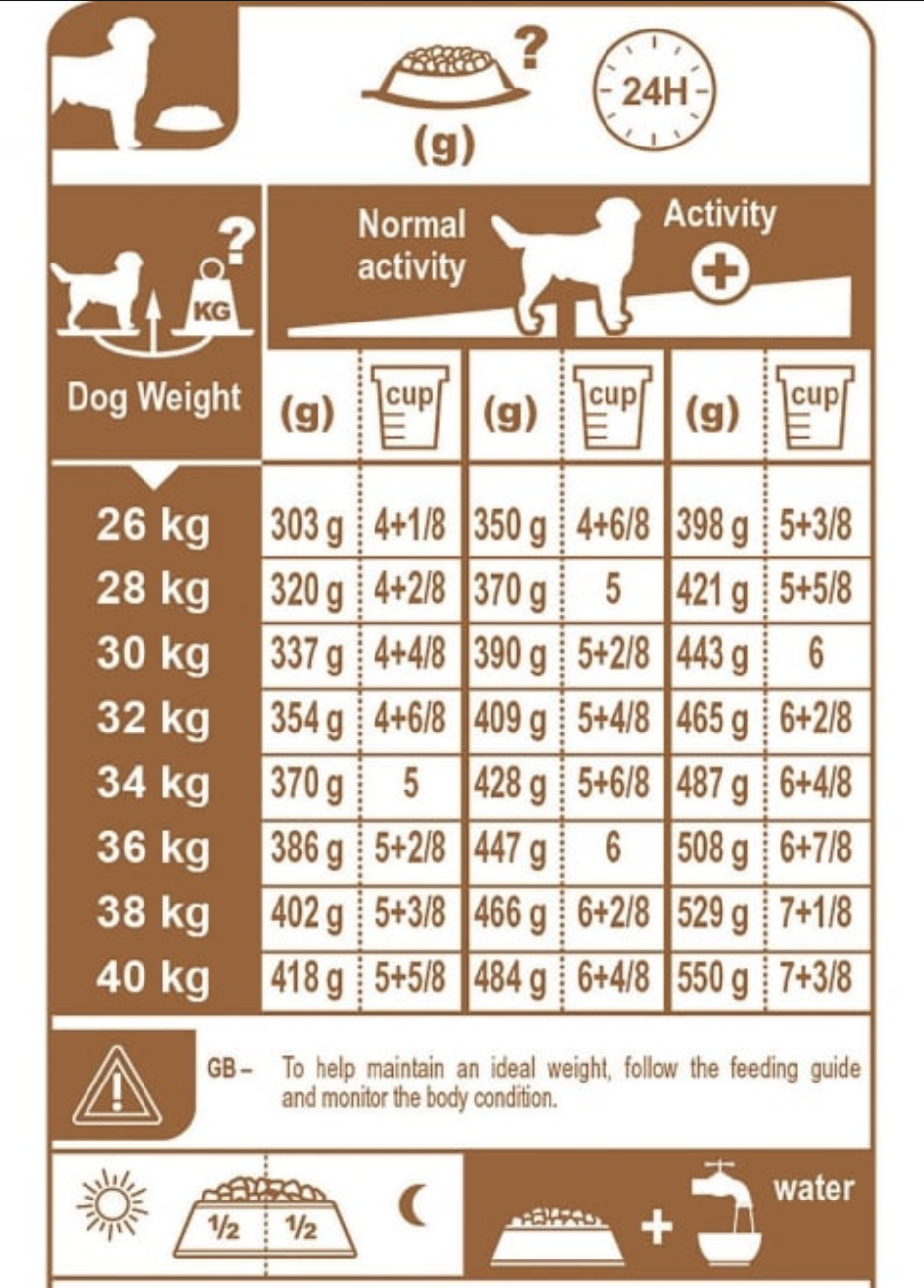
Image Source: doggiliciouus.com
Figuring Out Food Portions for Your 36 Kg Companion
A dog weighing 36 kg falls into the medium to large breed category. This means their nutritional needs are significant, but also vary greatly depending on their lifestyle and metabolism. Think of it like this: an Olympic athlete needs more calories than someone who works at a desk, right? The same applies to our canine companions.
Factors Influencing Food Needs
Several key elements will dictate the precise dog food portions your 36 kg dog requires:
- Age: Puppies, adults, and senior dogs have different nutritional demands. A growing puppy needs more calories and nutrients for development than a sedentary senior dog.
- Activity Level: A highly active dog that goes on long hikes or participates in dog sports will burn more calories than a dog that enjoys leisurely strolls.
- Metabolism: Just like people, dogs have individual metabolisms. Some dogs naturally burn calories faster than others, even with the same activity level.
- Breed: Certain breeds are prone to faster metabolisms or require specific dietary considerations. For example, a sighthound might need a different feeding plan than a brachycephalic breed of the same weight.
- Health Status: Dogs with certain health conditions, like diabetes or kidney disease, will require specialized diets and precise feeding amounts as part of their management.
- Food Type: The calorie density and nutritional content vary significantly between different brands and types of dog food. Dry kibble, wet food, and raw diets all have different caloric values per gram.
Using a Canine Diet Calculator
To get a more precise estimate, a canine diet calculator is invaluable. Many reputable pet food brands offer these tools on their websites. They typically ask for:
- Your dog’s current weight (36 kg).
- Your dog’s age.
- Your dog’s estimated activity level (e.g., sedentary, moderately active, very active).
- The specific dog food you are using (often by brand and formula).
The calculator will then provide a recommended daily feeding amount, usually in cups or grams. Always cross-reference this with the feeding chart on your dog’s food packaging.
Daily Kibble Intake: What to Expect
For a 36 kg adult dog with a moderate activity level, a good starting point for daily kibble intake is roughly 350 to 500 grams. However, this is a broad range.
Decoding Food Labels
Always check the feeding guidelines on your chosen dog food bag. These charts usually break down recommended amounts by weight. For a 36 kg dog, you’ll likely see figures that fall within this 350-500 gram range, but it’s crucial to look at the specifics.
Example Feeding Guide (Illustrative – Always check your specific food label):
| Dog Weight (kg) | Grams of Dry Food per Day |
|---|---|
| 30 | 300 – 420 |
| 36 | 350 – 500 |
| 40 | 400 – 550 |
This table is a general representation. The exact numbers will vary based on the food’s calorie content and the dog’s individual needs.
Adjusting Kibble Based on Activity
- Sedentary Dog: If your 36 kg dog spends most of its time lounging and only goes for short walks, you’ll want to aim for the lower end of the recommended range, perhaps around 350-400 grams.
- Moderately Active Dog: This dog enjoys daily walks, some playtime, and perhaps a longer weekend activity. The middle of the range, 400-450 grams, might be appropriate.
- Very Active Dog: If your 36 kg companion is engaged in vigorous exercise daily, agility training, or long-distance running, they could need the higher end, potentially 450-500 grams or even more.
Important Note: If you are switching your dog to a new food, always do so gradually over 7-10 days to avoid digestive upset.
Wet Food for Large Dogs: Considerations
Many owners opt for a mix of dry and wet food, or purely wet food. Wet food for large dogs offers several benefits:
- Palatability: Wet food is often more appealing to dogs due to its aroma and texture.
- Hydration: It contains a higher moisture content, which can be beneficial for dogs, especially those who don’t drink a lot of water.
- Lower Calorie Density (often): Some wet foods are less calorie-dense per serving than dry kibble, which can be helpful for weight management.
However, wet food is generally more expensive and can spoil if left out too long.
Calculating Wet Food Portions
Calculating wet food portions requires checking the calorie content. A 36 kg dog might need anywhere from 1500 to 2000 calories per day, depending on their activity level.
If a can of wet food contains 400 calories, and your dog needs 1800 calories:
1800 calories / 400 calories per can = 4.5 cans per day.
It’s crucial to read the can’s label for specific feeding recommendations and calorie information.
Mixed Feeding
Many owners find success with a mixed feeding approach. For example, you could feed half the recommended amount of dry food and half the recommended amount of wet food.
Example Mixed Feeding Plan (Illustrative):
- Total Daily Calories Needed: 1800 kcal
- Recommended Dry Food: 450g (contains 1600 kcal)
- Recommended Wet Food: 1 can (contains 400 kcal)
Mixed Option:
- 225g Dry Food (800 kcal) + 0.5 can Wet Food (200 kcal) = 1000 kcal. This is too low.
Let’s try again. If 450g dry food provides enough calories, and you want to add wet food for palatability:
- Dry Food: 350g (approx. 1300 kcal)
- Wet Food: 1/4 can (approx. 100 kcal)
- Total: 1400 kcal. Still a bit low for many active 36kg dogs.
You would need to adjust the amounts of both based on the specific calorie counts of your chosen foods and your dog’s precise caloric needs. This is where a dog food quantity calculator that allows input for mixed diets is most useful.
Puppy Feeding Chart: Not for Your 36 Kg Adult!
It’s vital to distinguish between adult dog nutrition and puppy needs. A puppy feeding chart is designed for growth and development, requiring more calories and specific nutrient ratios (like calcium and phosphorus). Feeding a 36 kg adult dog the amount recommended on a puppy chart would lead to overfeeding and potential health issues, including obesity.
A 36 kg dog is likely an adult or nearing adulthood. If you have a 36 kg puppy, their needs are significantly higher than an adult of the same weight, and they will still be growing. Their feeding plan should be guided by a reputable puppy growth chart and your veterinarian’s advice.
Senior Dog Nutrition: Adjusting for Age
As dogs age, their metabolism slows, and their activity levels often decrease. Senior dog nutrition focuses on maintaining lean muscle mass, supporting joint health, and managing potential age-related health issues.
For a 36 kg senior dog, you’ll likely need to reduce their food intake compared to their adult years.
- Reduced Calorie Needs: Senior dogs may require 10-20% fewer calories.
- Joint Support: Look for foods with glucosamine and chondroitin.
- Digestibility: Older dogs can have more sensitive digestive systems.
- Weight Management: Senior dogs are prone to weight gain, which can exacerbate joint problems and other health issues.
If your 36 kg dog is a senior, consult your veterinarian for a tailored feeding plan, which might involve a senior-specific diet and smaller, more frequent meals.
Weight Management Dog Food: When Portions Need Control
If your 36 kg dog is overweight, you’ll need to switch to weight management dog food. These formulas are designed to be lower in calories and fat, and higher in fiber to help your dog feel full.
When transitioning to a weight management diet:
- Consult Your Vet: They can confirm if your dog is overweight and recommend the best course of action.
- Calculate New Portions: Use the feeding guide for the weight management food. It will likely be a different amount than their previous food, even if the weight goal is the same.
- Monitor Closely: Weigh your dog regularly (e.g., every two weeks) and adjust portions as needed based on their progress and your vet’s guidance.
A 36 kg dog that is overweight might need to consume closer to 250-350 grams of a weight management kibble, but this is highly variable. Always follow the specific product’s recommendations.
Building a Balanced Dog Meal Plan
A balanced dog meal plan ensures your dog receives all the necessary macronutrients (protein, fats, carbohydrates) and micronutrients (vitamins, minerals) in the correct proportions.
Key Components of a Balanced Diet:
- Protein: Essential for muscle repair and growth. High-quality animal protein sources are ideal.
- Fats: Provide energy and are crucial for nutrient absorption.
- Carbohydrates: Offer energy, but should be in appropriate amounts and from digestible sources.
- Vitamins and Minerals: Support all bodily functions, from immunity to bone health.
- Water: Crucial for hydration and all metabolic processes.
Consulting Your Veterinarian
The best way to create a truly balanced meal plan is to work with your veterinarian. They can assess your dog’s specific needs and recommend:
- The best type of food (kibble, wet, raw, or a combination).
- Specific brands that meet high-quality standards.
- Appropriate portion sizes based on a thorough examination.
- Dietary supplements if necessary.
Homemade Diets
While some owners choose to prepare homemade diets, this is complex and requires expert veterinary nutritionist guidance. An imbalanced homemade diet can lead to serious health problems. If you go this route, work closely with a professional to ensure it’s nutritionally complete.
The Dog Food Quantity Calculator: Your Go-To Tool
As repeatedly mentioned, a dog food quantity calculator is your best friend in this process. These tools simplify the complex task of calculating food needs.
How They Work:
These calculators use algorithms based on established nutritional guidelines for dogs. They often employ formulas that consider:
- Resting Energy Requirement (RER): The calories needed for basic bodily functions at rest. For a 36 kg dog, RER is roughly calculated as (30 * weight in kg) + 70. So, (30 * 36) + 70 = 1080 + 70 = 1150 kcal.
- Daily Energy Requirement (DER): This adjusts the RER based on lifestyle factors. For example, a neutered adult dog with moderate activity might have a DER multiplier of 1.6. So, 1150 kcal * 1.6 = 1840 kcal.
The calculator then uses the calorie content per gram of your specific dog food to determine the total grams needed.
Where to Find Them:
- Pet Food Brand Websites: Most major pet food manufacturers have one.
- Veterinary Websites: Some clinics offer resources or links to reliable calculators.
- Pet Nutrition Websites: Specialized sites dedicated to pet nutrition may host these tools.
Tips for Using Calculators:
- Be Honest: Accurately input your dog’s weight, age, and activity level.
- Know Your Food: Have the specific dog food brand and formula ready, as calorie content varies widely.
- Treat as a Starting Point: The calculator provides an estimate. Monitor your dog and adjust as needed.
Monitoring Your Dog’s Weight and Condition
The most critical aspect of feeding is observing your dog. No calculator or feeding guide is perfect for every individual.
Body Condition Score (BCS)
Learn to assess your dog’s Body Condition Score (BCS). This is a visual and physical way to determine if your dog is at an ideal weight.
How to Assess BCS:
- Ribs: You should be able to easily feel your dog’s ribs under a thin layer of fat. You shouldn’t have to press hard to feel them, nor should they be visibly protruding.
- Waist: When viewed from above, your dog should have a visible waist tuck behind their rib cage.
- Abdomen: When viewed from the side, your dog’s abdomen should be tucked up towards their hind legs.
A BCS of 4-5 on a 9-point scale is typically considered ideal.
What to Look For:
- Weight Gain: If your dog’s ribs are becoming harder to feel, or they are developing a visible “shelf” at their waist, they are likely gaining weight. Reduce food portions slightly or increase activity.
- Weight Loss: If your dog’s ribs are very prominent and their bones feel sharp, they may be underweight. Increase food portions or consult your vet.
- Energy Levels: A well-fed dog will have good energy levels appropriate for their age and breed. Lethargy can sometimes indicate underfeeding or underlying health issues.
- Coat Quality: A healthy diet contributes to a shiny, healthy coat. Dullness or excessive shedding could be a dietary indicator.
Conclusion: Personalizing Your 36 Kg Dog’s Diet
Feeding your 36 kg dog the correct amount of food is a dynamic process. It starts with using resources like a dog food quantity calculator and adhering to general feeding guide for 36kg dog principles. However, success lies in constant observation, a willingness to adjust, and open communication with your veterinarian.
Whether you’re feeding dry kibble, wet food for large dogs, or a combination, remember that a balanced dog meal plan tailored to your individual dog’s age, activity, and health is key. Don’t rely solely on generic charts; use them as a starting point and let your dog’s body condition and vitality be your ultimate guide.
Frequently Asked Questions (FAQ)
Q1: How much should I feed my 36 kg dog if they are mostly indoors and not very active?
For a less active 36 kg dog, you’ll want to stick to the lower end of the recommended range, likely around 350-400 grams of standard adult dry kibble per day. It’s crucial to monitor their body condition and adjust if they start to gain weight. Consider a food specifically formulated for less active dogs or for weight management if needed.
Q2: Can I feed my 36 kg dog human food?
While some human foods are safe for dogs in small quantities, it’s generally not advisable to build their primary diet around them. Human food often lacks the balanced nutrition dogs need and can be too high in fat, salt, or sugar. Certain foods, like chocolate, onions, and grapes, are toxic to dogs. Stick to high-quality commercial dog food or a vet-approved homemade diet.
Q3: My 36 kg dog is a puppy. How much should I feed them?
A 36 kg puppy is a large breed puppy. They require significantly more calories and a specific nutrient balance for growth, particularly protein and calcium. You will need to consult a puppy feeding chart specific to large breeds and ideally get guidance from your veterinarian. Do not use adult feeding guidelines. Their food intake will be higher and will need to be adjusted frequently as they grow.
Q4: How often should I feed my 36 kg dog?
Most adult dogs do well with two meals a day, one in the morning and one in the evening. Puppies and senior dogs might benefit from three or more smaller meals. Splitting the daily recommended amount into two equal portions helps with digestion and can prevent bloat, which is a risk for some larger breeds.
Q5: What are the signs my 36 kg dog is eating the wrong amount of food?
- Too Much: Weight gain, difficulty feeling ribs, lethargy, increased stool volume.
- Too Little: Unexplained weight loss, visible ribs and bones, poor coat quality, low energy levels, excessive begging.
Regularly checking your dog’s Body Condition Score (BCS) is the best way to monitor their intake.