
What is a dominant dog? A dominant dog often exhibits behaviors like guarding resources, mounting, persistent barking, or challenging commands, suggesting they are trying to establish a top position within the household hierarchy. Can I train a dominant dog? Yes, you absolutely can train a dog exhibiting dominant behaviors. Who is responsible for training a dominant dog? The owner is solely responsible for providing consistent and effective training.
Training a dog who displays what appears to be dominant behavior requires patience, consistency, and a firm, yet fair, approach. It’s crucial to remember that “dominance” in dogs is a complex topic, and many behaviors previously labeled as dominance are now better understood as a lack of clear guidance, anxiety, or a learned response. The goal of training is not to “dominate” your dog, but rather to establish a clear leadership role, build a strong bond, and ensure your dog understands their place within the family as a well-behaved companion.
This article will delve into effective strategies and solutions for training a dog exhibiting behaviors often associated with dominance. We will explore key training principles, practical techniques, and important considerations to help you achieve a harmonious relationship with your canine friend.
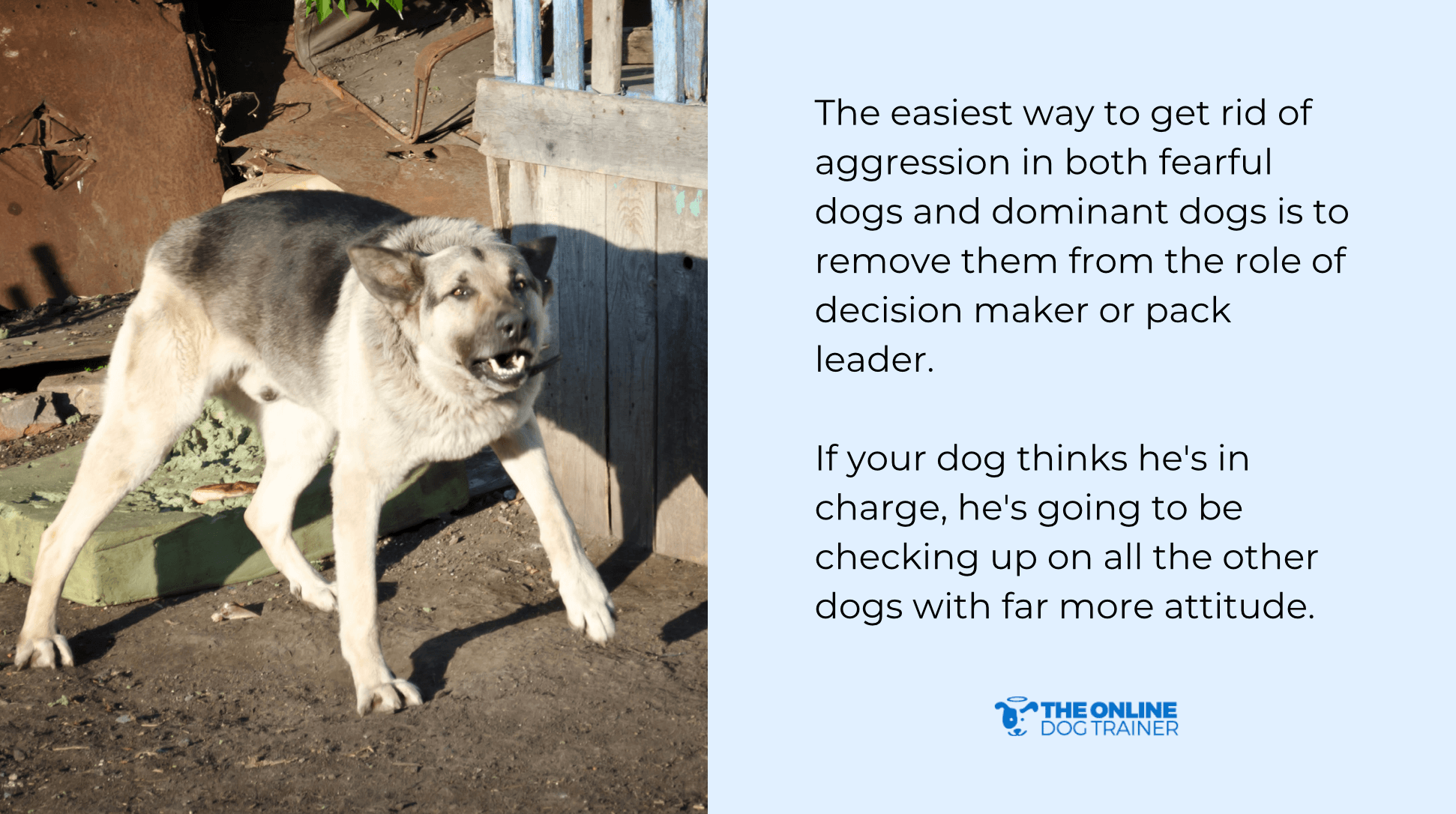
Image Source: theonlinedogtrainer.com
Deciphering “Dominant” Dog Behaviors
Before diving into training solutions, it’s essential to identify the specific behaviors that lead owners to believe their dog is “dominant.” These can include:
- Resource Guarding: Growling, snapping, or lunging when someone approaches their food, toys, or favorite resting spot.
- Pushiness: Constantly seeking attention, nudging, pawing, or jumping up, even when told “no.”
- Disregard for Commands: Seemingly ignoring cues or only responding when it suits them.
- Mounting: Mounting people, other dogs, or objects, which can be a sign of excitement, stress, or seeking attention, not always dominance.
- Territorial Barking: Excessive barking at perceived intruders at the door or window.
- Challenging Behavior: Stiffening, staring, or growling when asked to move from a preferred spot (like the couch).
- Leash Pulling: Aggressively pulling on the leash, seemingly trying to lead the way.
It’s important to note that some of these behaviors can also stem from fear, anxiety, or a lack of proper socialization and training. A professional trainer or veterinary behaviorist can help pinpoint the root cause of the behavior.
Core Principles for Training a Dog Exhibiting Dominant Behaviors
The foundation of successfully training any dog, especially one showing challenging behaviors, lies in a few key principles:
- Positive Reinforcement: This is the cornerstone of effective dog training. It involves rewarding desired behaviors with something the dog finds valuable, such as treats, praise, or a favorite toy. This makes the dog more likely to repeat those behaviors. It builds a positive association with training and strengthens your bond.
- Leadership: Establishing yourself as a confident and fair leader is crucial. This doesn’t mean being harsh or punitive. It means providing structure, making decisions, and ensuring your dog looks to you for guidance.
- Consistency: Every member of the household must follow the same rules and use the same commands. Inconsistency confuses the dog and undermines training efforts.
- Clear Boundaries: Dogs thrive on predictability. Setting and enforcing clear boundaries about what is and isn’t acceptable behavior helps them feel secure and understand their role.
Effective Training Solutions
Now, let’s explore specific training methods and techniques that address behaviors often associated with dominance.
1. Mastering Obedience Training with Positive Reinforcement
Obedience training is non-negotiable. A well-trained dog is a happy dog, and a dog that understands and responds to commands is less likely to feel the need to assert themselves in inappropriate ways.
- Basic Commands First: Start with foundational commands like “sit,” “stay,” “come,” and “down.”
- Sit: Teach your dog to sit before receiving anything – food, praise, or access to the door. This teaches patience and impulse control.
- Stay: A solid “stay” command, even for short periods, reinforces that you are in control and your dog must wait for your release.
- Come: A reliable recall is paramount for safety and control. Practice this in various environments with increasing distractions.
- Down: A “down” command can help settle a dog and teach them to relax.
- Using Positive Reinforcement:
- High-Value Treats: Use small, highly palatable treats that your dog loves.
- Timing is Key: Reward the desired behavior immediately as it happens.
- Verbal Praise: Enthusiastic praise (“Good boy!”) reinforces the positive action.
- Clicker Training: A clicker can be a precise marker for the exact moment the dog performs the correct action, followed by a treat.
Table: Basic Obedience Training Cues
| Command | How to Teach (Positive Reinforcement) | Purpose |
|---|---|---|
| Sit | Hold a treat near your dog’s nose. Move it slowly up and over their head. As their head follows the treat, their rear end should naturally go down. As soon as their rear touches the ground, say “Sit,” click (if using a clicker), and give the treat. | Teaches a fundamental cue for impulse control and polite behavior. Can be used before receiving greetings, food, or going through doors. |
| Stay | Ask your dog to “Sit” or “Down.” With your hand flat and facing them, say “Stay.” Take one step back. If they remain in place, return and reward them. Gradually increase the distance and duration. Release them with a cue like “Okay” or “Free.” | Teaches patience and self-control. Prevents a dog from rushing ahead or breaking position prematurely. Essential for managing situations where the dog needs to wait. |
| Come | Start in a quiet area. Call your dog’s name followed by “Come!” Use an exciting tone. When they come to you, praise enthusiastically and give a high-value treat. Make coming to you the best thing ever. Never call your dog to punish them. | A critical safety command. Ensures your dog returns to you when called, especially in potentially dangerous situations. Reinforces that coming to you is rewarding. |
| Down | From a sit, hold a treat near your dog’s nose. Slowly lower it to the ground between their paws and then slightly away from them. As they follow the treat down, they should lie down. As their elbows touch the ground, say “Down,” click, and reward. | Encourages relaxation and calmness. Can be used to interrupt over-arousal and encourage a dog to settle. Offers a lower-energy position than sitting. |
2. Building Impulse Control
A dog that can control its impulses is less likely to act out in behaviors driven by instinct or excitement.
- “Leave It”: Teach your dog to ignore tempting items.
- Place a low-value treat on the floor and cover it with your hand. Let your dog sniff and paw, but don’t let them get it. As soon as they pull their head away, say “Leave it,” and give them a different, higher-value treat from your other hand.
- Progress to leaving the treat uncovered, then progress to more tempting items and environments.
- Waiting for Food: Don’t put your dog’s food bowl down until they are sitting calmly and waiting. Make them “wait” before eating.
- Crate Training: A crate can be a valuable tool for teaching a dog to be calm and wait. Ensure it’s a positive space, not a punishment area.
3. Socialization: A Lifelong Commitment
While often thought of as for puppies, socialization is a continuous process for dogs of all ages. Proper socialization helps dogs become well-adjusted and less reactive to new people, places, and other animals.
- Positive Exposures:
- People: Introduce your dog to a variety of people of different ages, appearances, and gaits in a positive, controlled manner.
- Other Dogs: Arrange controlled playdates with known, well-behaved dogs. Observe body language and intervene if either dog becomes stressed. Avoid overwhelming your dog with too many dogs at once, especially if they are showing signs of stress.
- Environments: Expose your dog to different sounds, sights, and surfaces in a gradual, positive way.
- Avoid Force: Never force your dog into a situation that clearly makes them uncomfortable. Instead, work at a distance where they feel safe and reward their calm behavior. Gradually decrease the distance as they gain confidence.
4. Establishing Leadership and Assertive Communication
Leadership in dog training is about guiding your dog and making decisions for them, not about dominance displays.
- Leadership Through Routine:
- Meal Times: You control when food is given.
- Walks: You set the pace and direction on walks.
- Rest: You dictate where and when the dog rests (e.g., on their own bed, not the prime spot on the couch unless invited).
- Assertive Communication:
- Calm Confidence: Speak in a clear, firm, but not aggressive tone. Avoid yelling or frustration.
- Body Language: Use confident posture. Avoid looming over your dog.
- “Nothing in Life is Free” (NILIF): This principle suggests that dogs should “earn” privileges by performing a simple command. For example, sit before getting pets, sit before going through a door, sit before receiving a toy. This reinforces that you are the provider of good things and that cooperation leads to rewards.
5. Setting Clear Boundaries and Enforcing Them
Clear boundaries provide structure and security for your dog.
- No Uninvited Guests: If your dog jumps on people, enforce a “sit” or “away” command before they get attention.
- Doorway Manners: Teach your dog to wait for permission to go through doorways. They should not rush out ahead of you.
- Furniture Rules: Decide if your dog is allowed on furniture. If not, consistently redirect them to their own bed. If they are allowed, they should be invited and should move when asked.
- Calm Greetings: When people arrive, ensure your dog is under control. This might mean having them on a leash or in their crate initially.
6. Behavior Modification Techniques for Specific Challenges
Behavior modification involves systematically changing a dog’s response to a particular stimulus or situation.
- Resource Guarding: This is a serious issue and often requires professional help.
- Desensitization and Counter-Conditioning: The goal is to change the dog’s emotional response to the presence of others near their resources. You can start by trading a low-value item for a high-value treat before the dog shows any guarding behavior. Gradually increase the value of the item and the proximity of the person, always ensuring the dog remains relaxed.
- Never Punish Guarding: Punishing a dog for growling can suppress the warning signal, leading to a dog that bites without warning.
- Leash Pulling:
- Red Light, Green Light: When your dog pulls, stop walking. Only resume when the leash slackens. This teaches them that pulling stops progress.
- Front-Clip Harness or Head Halter: These tools can provide better control and discourage pulling without causing pain. Use them as training aids, not as a substitute for training.
- Excessive Barking:
- Identify the Trigger: Is it boredom, fear, attention-seeking, or territoriality?
- Teach an Alternative Behavior: Train a “quiet” command or teach them to go to their “place” when the trigger occurs.
- Management: If the trigger is people passing by, block their view with curtains or frosted glass.
The Role of Pack Structure and Leadership
While the concept of pack structure in domestic dogs has been debated and refined, the idea of a clear leader providing guidance and structure is still highly relevant. Think of yourself as a benevolent leader who provides safety, security, and rules. Your dog looks to you to make decisions and guide them through life.
- You Make the Rules: You decide when walks happen, when meals are served, and who gets attention.
- You Provide the Resources: Your dog’s food, toys, and affection come from you.
- You Ensure Safety: You make decisions that keep your dog safe, even from themselves.
This leadership is built on trust and clear communication, not on intimidation.
Addressing Common Misconceptions About Dominance
Many behaviors attributed to dominance are often misinterpretations.
- Mounting: As mentioned, mounting can be due to excitement, stress, or play, not just dominance. Training should focus on teaching the dog to settle and engage in appropriate greetings.
- Staring: A dog staring intently might be seeking attention, unsure of what to do next, or simply observant. It’s not always a challenge.
- Jumping: Jumping is often an attention-seeking behavior learned because it usually gets a reaction from people.
- Pushiness: A dog that pushes for attention may simply be seeking connection and hasn’t learned polite ways to ask for it.
What If My Dog’s Behavior Persists?
If you are struggling with your dog’s behavior, or if the behaviors are severe, it’s crucial to seek professional help.
- Certified Professional Dog Trainer (CPDT-KA or CPDT-KSA): Look for trainers who use positive reinforcement methods and have experience with behavior modification.
- Veterinary Behaviorist (DACVB): For deeply ingrained or complex behavioral issues, a veterinary behaviorist can provide diagnosis, medication, and specialized behavior modification plans.
Frequently Asked Questions (FAQ)
Q1: Can I correct my dog if they exhibit dominant behavior?
A1: While “correction” can be a loaded term, consistent redirection and the withholding of rewards for unwanted behaviors are effective. Avoid harsh punishment, as it can increase fear and aggression. Focus on teaching the dog what you want them to do instead.
Q2: Is my dog too old to train?
A2: No, dogs can learn new behaviors and modify old ones at any age. While puppies are often easier to shape, older dogs are certainly capable of learning and benefiting from training.
Q3: Should I use a prong collar or choke chain?
A3: While some trainers still advocate for these tools, modern behavior modification and positive reinforcement methods are widely considered more effective and humane. These tools can cause pain and fear, potentially leading to new behavioral problems or exacerbating existing ones. It’s best to consult with a trainer who uses positive methods.
Q4: How long does it take to train a “dominant” dog?
A4: The timeline varies greatly depending on the dog, the specific behaviors, the consistency of the owner, and the methods used. Be patient and celebrate small victories. It’s a journey, not a race.
Q5: What if my dog is aggressive?
A5: If your dog exhibits aggression (growling, biting, lunging with intent to harm), it’s critical to seek immediate professional help from a veterinary behaviorist or a highly qualified trainer experienced with aggression. This is not a situation to tackle alone.
By applying these principles and techniques with dedication and patience, you can effectively guide your dog toward becoming a well-behaved and happy companion. The journey of obedience training, building impulse control, and fostering clear communication through positive reinforcement will strengthen your bond and create a more harmonious living environment for everyone.