
So, you want to be a Search and Rescue (SAR) dog handler? Becoming a SAR dog handler is a challenging but incredibly rewarding path that requires dedication, passion, and a deep bond with your canine partner. What does it take to join these elite teams? It involves rigorous training for both you and your dog, understanding specific SAR dog training methods, and meeting stringent SAR dog team requirements.
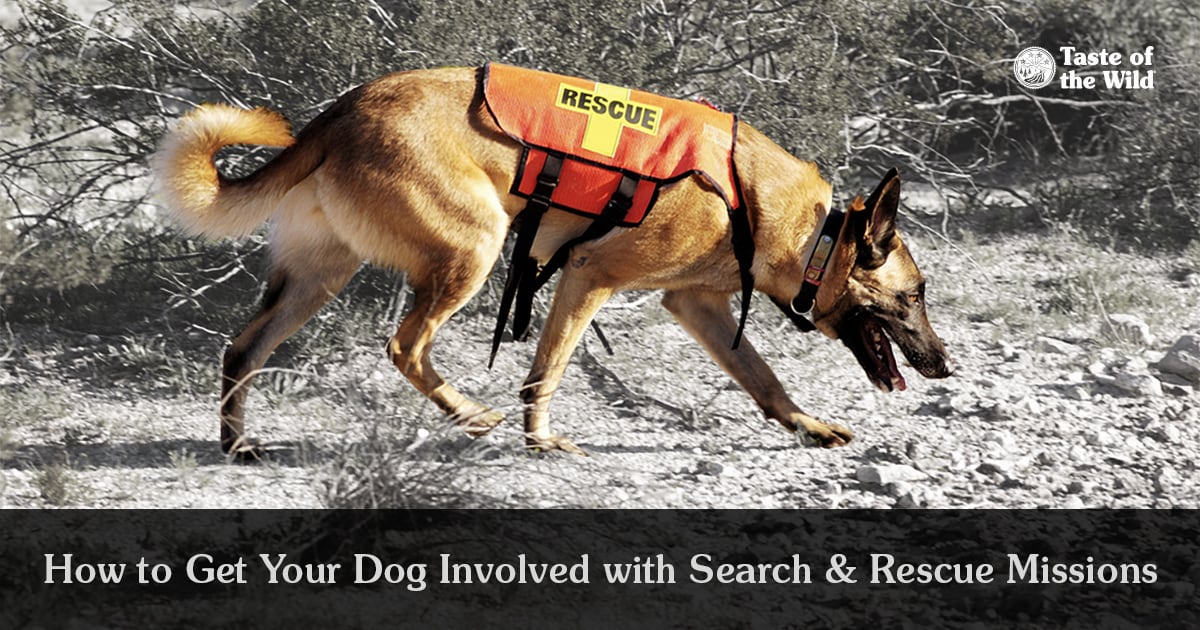
Image Source: www.tasteofthewildpetfood.com
The Journey to Becoming a SAR Dog Handler
Embarking on the journey to become a Search and Rescue dog handler is a significant commitment. It’s not just about having a dog; it’s about building a partnership and acquiring a unique set of skills. This guide will walk you through the essential steps, from initial considerations to achieving certification.
First Steps: Assessing Your Suitability and Your Dog’s Potential
Before diving headfirst into the world of SAR, it’s crucial to be honest with yourself about the commitment involved and to assess your dog’s suitability.
Do You Have What It Takes?
- Time Commitment: SAR work is not a hobby; it’s a lifestyle. Expect to dedicate significant hours to training, maintenance, and responding to calls. This includes regular training sessions, attending workshops, and potentially traveling for deployments.
- Physical Fitness: SAR operations can be physically demanding. You’ll be hiking over rough terrain, working in various weather conditions, and carrying gear. Maintaining a good level of physical fitness is essential.
- Mental Fortitude: SAR handlers must remain calm under pressure, make quick decisions, and cope with stressful situations. Resilience and a strong emotional constitution are vital.
- Teamwork: While your bond with your dog is paramount, SAR work is inherently a team effort. You’ll be working with other handlers, incident commanders, and emergency services personnel. Good communication and cooperation are key.
- Resourcefulness: You might be working in remote areas with limited resources. Being able to think on your feet and adapt to changing circumstances is crucial.
Is Your Dog the Right Fit?
Not every dog is suited for SAR work, regardless of breed. Key characteristics to look for include:
- Drive and Motivation: Your dog needs to be highly motivated by play or food, possess a strong desire to work, and be eager to please.
- Focus and Concentration: The ability to remain focused on a task despite distractions (noise, smells, other people) is vital.
- Confidence and Nerve: Your dog should be confident in new environments, comfortable around unfamiliar people and equipment, and not easily frightened by loud noises or unusual situations.
- Physical Capability: Your dog needs to be healthy, agile, and possess the stamina for long searches. Certain breeds are naturally more inclined towards SAR, but individual temperament is more important than breed alone.
- Trainability: A dog that is eager to learn and responds well to training is essential. This includes a strong foundation in obedience.
Finding a SAR Organization
The next critical step is to connect with an established Search and Rescue organization. These organizations provide the structure, mentorship, and training opportunities you’ll need.
Types of SAR Organizations
- Volunteer SAR Organizations: The vast majority of SAR dog handlers operate as volunteer SAR dog handlers. These organizations are often county or state-funded but rely heavily on volunteers for their operational teams. They are an excellent starting point for individuals looking to contribute their skills and time.
- Law Enforcement/Fire Department K9 Units: Some handlers work for official agencies as paid professionals. This often requires prior experience in law enforcement or firefighting and a more formal application process.
How to Find a Local Team
- State Emergency Management Agencies: Your state’s emergency management agency or homeland security department often maintains a list of certified SAR teams within the state.
- County Sheriff’s Office/Emergency Management: Contact your local sheriff’s office or county emergency management office. They can often direct you to or confirm the existence of local SAR units.
- Online Search: Use search engines with terms like “[Your State] Search and Rescue,” “[Your County] SAR K9,” or “[Your State] Disaster Response Teams.”
The Initial Stages of Training and Integration
Once you’ve identified a potential SAR organization, the initial stages involve proving your commitment and starting the foundational training.
Informational Meetings and Application Processes
- Most organizations will have informational meetings or require you to submit an application. This is your chance to learn about their specific requirements, training schedules, and operational areas.
- Be prepared to discuss your experience with dogs, your availability, and your motivation for joining.
Basic Obedience and Handler Skills
Before your dog can even begin specific SAR training, you will need to demonstrate proficiency in basic obedience. This is the bedrock of all advanced training.
- On-Leash and Off-Leash Control: Your dog must reliably respond to commands like “sit,” “stay,” “come,” “down,” and “heel,” both on and off-leash, in distracting environments.
- Handler Skills: You will also be evaluated on your general dog handling abilities, including your ability to read your dog’s body language, your communication style, and your understanding of positive reinforcement techniques. This is a core component of K9 handler training.
Essential Training for SAR Dog Handlers and Their K9s
The training process is rigorous and multi-faceted, focusing on developing both the handler and the dog into a cohesive and effective unit. This is where SAR dog training schools and mentorship play a vital role.
Foundational Obedience and Socialization
- Proofing Commands: This involves ensuring your dog obeys commands reliably in a variety of environments with increasing distractions. This includes noise, crowds, different surfaces, and the presence of other animals.
- Socialization: Your dog must be comfortable and well-behaved around other dogs, people of all ages, and various types of equipment (sirens, vehicles, radios).
Introduction to Search Concepts
Once basic obedience is solid, the training transitions to introducing your dog to the concept of searching.
Understanding Search Dog Training Methods
Different SAR disciplines utilize various search dog training methods. The core idea is to teach the dog to find a person and alert the handler.
- Air Scenting: The dog is trained to detect human scent particles carried on the wind. They will follow the scent plume to its source. This is common for wilderness SAR dog handlers working in vast, open areas.
- Trailing/Tracking: The dog follows the specific scent left behind by an individual’s footprints and body scent. This is often used in more urban or defined areas.
- Human Remains Detection (HRD): This specialized area trains dogs to locate deceased individuals by their unique scent signature. This can be applied in various environments, including underwater.
- Disaster Dog Handler Training: For those interested in disaster work, training focuses on locating live victims in collapsed structures, rubble piles, and confined spaces. This requires a different skillset and often involves dogs that are comfortable working in confined, unstable, and potentially noisy environments.
Teaching the Alert
A crucial part of K9 handler training is teaching the dog a clear and consistent alert behavior when they find a subject.
- Bark Alert: The dog barks repeatedly at the source of the scent or the person.
- Sit/Hold Alert: The dog sits next to the person and remains with them until the handler arrives.
- Bring-Back Alert: The dog retrieves a specific item from the person and brings it back to the handler.
Advanced Search and Navigation Training
As the dog’s understanding of the search task grows, training becomes more complex.
Scenario-Based Training
- Simulated Searches: Handlers and dogs participate in mock searches that mimic real-life scenarios. This could involve hiding a person in the woods, a building, or a disaster site.
- Navigation and Map Reading: Handlers are trained in land navigation, map reading, and GPS usage, essential for effective searching in varied terrains.
- Working in Different Environments: Training is conducted in various conditions: day and night, rain, snow, wind, and different temperatures.
Canine Conditioning and Endurance
- Physical Conditioning: Regular exercise and activities that build stamina and strength are vital to ensure the dog can perform during extended searches.
- Mental Conditioning: Desensitizing the dog to potential stressors they may encounter in the field is equally important. This includes loud noises, fire, water, and heavy equipment.
Handler Training Components
The handler’s role is as critical as the dog’s. Handler training covers a broad spectrum of knowledge and skills.
Search Strategy and Tactics
- Understanding Scent Theory: Knowing how scent behaves in different environmental conditions is fundamental to effective searching.
- Search Patterns: Learning various search patterns (grid search, spiral search, point search) ensures thorough coverage of an area.
- Incident Command System (ICS): Handlers must be familiar with the Incident Command System, the standard management structure for emergency responses.
First Aid and Canine Care
- Canine First Aid: Knowing how to provide immediate medical attention to your dog in case of injury or illness is a mandatory skill.
- Environmental Awareness: Understanding how weather conditions can affect your dog’s performance and health is crucial.
Radio Communication and Reporting
- Effective Communication: Clear and concise radio communication is essential for coordinating with the SAR team.
- Documentation and Reporting: Handlers are often responsible for documenting their search efforts and reporting findings.
Meeting SAR Dog Team Requirements and Certification
Achieving official search and rescue dog certification is the culmination of extensive training and evaluation. This ensures that each SAR dog team is competent and ready for deployment.
The Certification Process
- Organization-Specific Standards: Each SAR organization, and often each national certifying body, will have its own set of SAR dog team requirements. These typically involve demonstrating proficiency in obedience, agility, search effectiveness, and handler skills.
- Evaluation: Certification typically involves a rigorous evaluation by experienced assessors. This might include:
- Obedience and Agility Tests: Proving the dog’s control and ability to navigate obstacles.
- Search Tests: Successfully locating hidden subjects within a set time limit and in varying conditions.
- Indication Tests: Demonstrating a reliable and clear alert.
- Handler Skills Evaluation: Assessing the handler’s knowledge of search strategy, navigation, and communication.
Types of SAR Dog Disciplines and Certifications
- Wilderness SAR Dog Handler: These teams specialize in locating missing persons in natural environments like forests, mountains, and deserts. They are often certified in air scenting or trailing.
- Urban SAR (USAR) Dog Handler: These teams are trained to locate victims in collapsed structures and urban environments. This often includes rubble pile searches and confined space work.
- Disaster Dog Handler: A subset of USAR, these handlers and their dogs are specifically trained for large-scale disaster events like earthquakes or hurricanes.
- Human Remains Detection (HRD) Dog Handler: These teams are certified to locate deceased individuals.
- Water Search Dog Handler: A specialized area where dogs are trained to detect the scent of human remains or drowning victims in or near water.
Maintaining Certification
- Ongoing Training: Certification is not a one-time achievement. SAR dog teams must maintain their skills through regular training and recertification evaluations.
- Continuing Education: Handlers often participate in workshops, seminars, and cross-training to enhance their skills and stay current with best practices.
Building Your Partnership: Beyond the Training
The bond between a handler and their dog is the foundation of a successful SAR team. This partnership is built through consistent positive interaction and shared experiences.
The Importance of Trust and Communication
- Mutual Respect: A strong partnership is built on mutual respect and trust between handler and dog.
- Reading Your Dog: A handler must be attuned to their dog’s subtle cues, understanding when the dog is tired, frustrated, or on the scent.
- Positive Reinforcement: Using positive reinforcement methods builds a willing and eager partner, rather than one that works out of fear or coercion.
Lifelong Learning and Development
The world of SAR is constantly evolving, with new techniques and technologies emerging.
- Stay Informed: Keep abreast of advancements in search tactics, canine behavior, and relevant emergency management protocols.
- Network with Other Handlers: Sharing experiences and knowledge with other K9 handler training professionals can be incredibly beneficial.
- Attend Seminars and Conferences: These events offer opportunities to learn from experts and refine your skills.
Frequently Asked Questions (FAQ)
Q1: What breeds are best for SAR work?
While many breeds can succeed in SAR, breeds with high drive, intelligence, agility, and a strong desire to please often excel. These include German Shepherds, Labrador Retrievers, Belgian Malinois, Border Collies, and Golden Retrievers. However, individual temperament and drive are more important than breed alone.
Q2: How long does it take to become a certified SAR dog handler?
The timeline can vary significantly depending on the individual, the dog’s aptitude, and the intensity of training. Typically, it takes 1 to 3 years of dedicated training to achieve initial certification. This includes foundational obedience, specialized SAR training, and meeting SAR dog team requirements.
Q3: Can I use my existing dog for SAR?
Yes, if your dog possesses the right temperament and drive. However, even an experienced dog will need to undergo specialized SAR training. It’s often easier to start with a younger dog and train them from the beginning, but experienced dogs can be successful with dedicated training.
Q4: What are the costs involved?
SAR work can be expensive, especially for volunteer handlers. Costs include:
* Dog acquisition and food
* Veterinary care and specialized equipment (harnesses, boots, first-aid kits)
* Training classes, seminars, and travel
* Certification fees
* Personal gear (hiking boots, outdoor clothing, GPS)
Many volunteer organizations have some financial support, but handlers should be prepared for significant out-of-pocket expenses.
Q5: How often do SAR dog teams train?
Regular training is crucial for maintaining proficiency. Most teams train at least once or twice a month for full training days, in addition to individual handler-dog training sessions throughout the week. This ensures the dog and handler stay sharp and ready for deployment.
Q6: What is the difference between a wilderness SAR dog handler and a disaster dog handler?
Wilderness SAR dog handlers focus on locating missing persons in natural environments, relying on air scenting or trailing techniques. Disaster dog handlers are trained to find victims in collapsed structures and rubble after events like earthquakes or building collapses, often working in confined and unstable spaces.
Q7: Do I need prior experience with dogs?
While prior experience with dogs is beneficial, it’s not always a strict requirement. However, a strong willingness to learn about canine behavior, positive reinforcement training techniques, and a commitment to ongoing education in dog handler skills are essential. Many organizations provide mentorship for new handlers.
Conclusion
Becoming a Search and Rescue dog handler is a challenging but deeply fulfilling endeavor. It’s a path that requires unwavering dedication, a strong partnership with your canine companion, and a commitment to continuous learning. By understanding the essential SAR dog team requirements, dedicating yourself to rigorous K9 handler training, and embracing the spirit of service, you can contribute significantly to saving lives and bringing hope to those in need. Whether you aspire to be a wilderness SAR dog handler or a disaster dog handler, the journey begins with a shared passion and a willingness to train.