
Can you get dog poop stains out of carpet? Yes, you absolutely can! This comprehensive guide will walk you through the most effective methods for tackling those unwelcome accidents, ensuring your carpets look and smell fresh again. We’ll cover everything from immediate action to deep cleaning, and how to prevent future issues.
Dog messes are an unfortunate reality for many pet owners. While we love our furry companions, accidents happen. Dog poop stains on carpet can be particularly stubborn, leaving behind not just visual marks but also lingering odors. This guide is your go-to resource for learning how to effectively remove these stains and restore your carpets to their former glory.
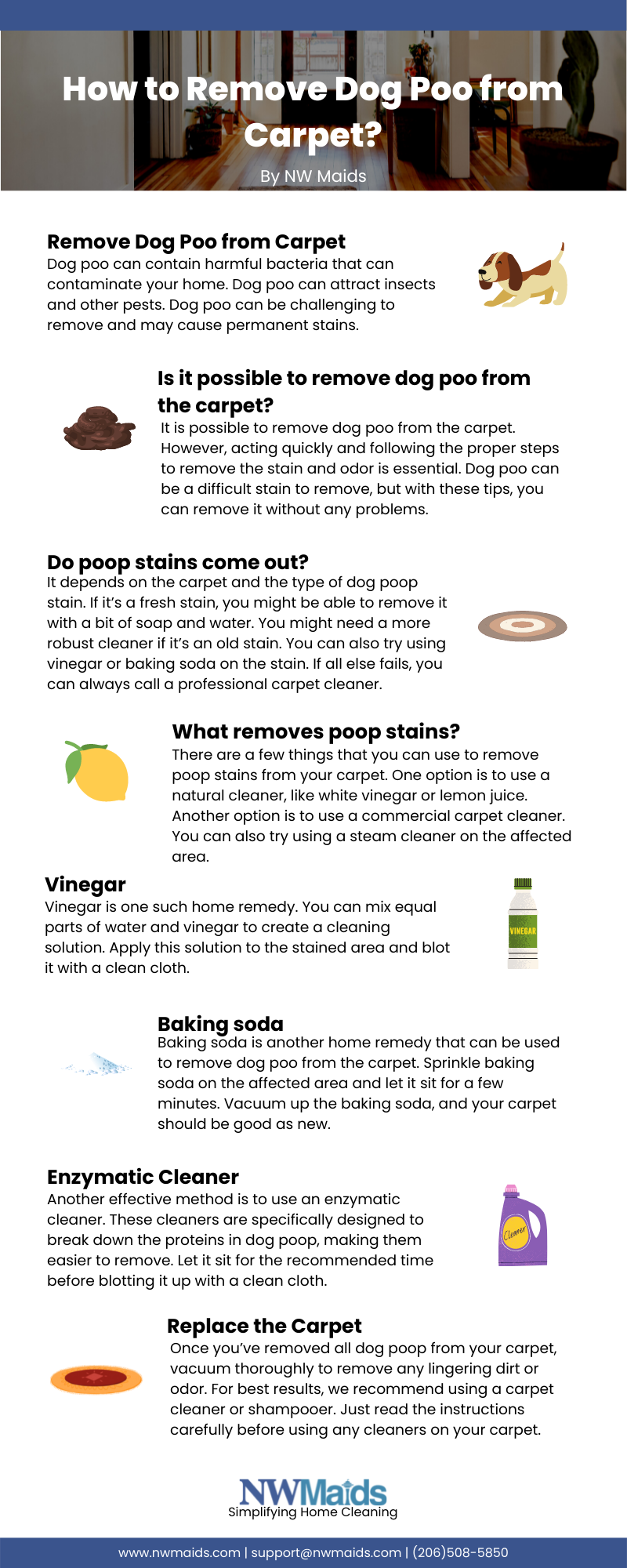
Image Source: nwmaids.com
Immediate Action: The First Few Minutes Matter
When you discover a dog poop incident on your carpet, acting fast is crucial. The longer the mess sits, the deeper it penetrates the carpet fibers and backing, making it harder to remove.
Key Steps for Quick Cleanup
-
Gather Supplies: Before you touch the mess, make sure you have your cleaning tools ready. This includes:
- Paper towels or old rags
- Plastic gloves
- A plastic bag for disposal
- A dull knife or spoon for scooping
- Your chosen cleaning solution (we’ll discuss options later)
-
Scoop Up Excess: Wearing gloves, carefully scoop up as much of the solid waste as possible. Use a dull knife or spoon to gently lift the material. Avoid rubbing it in, as this will spread the stain and push it deeper into the carpet. Work from the outside of the mess towards the center.
-
Blot, Don’t Rub: Once the bulk of the poop is gone, use clean paper towels or rags to gently blot the area. Continue blotting with fresh sections of towel until no more solid residue is transferred. Again, avoid rubbing, which can damage carpet fibers and spread the stain.
Tackling the Stain: Cleaning Solutions and Methods
After the initial removal, you’ll be left with a residue and potentially a stain. Here’s how to address it effectively.
Using Household Cleaners Safely
Many common household items can help lift dog poop stains. However, it’s always wise to test any cleaning solution on an inconspicuous area of your carpet first to ensure it doesn’t cause discoloration or damage.
Vinegar and Water Solution
Vinegar is a natural deodorizer and disinfectant. A simple solution of white vinegar and water is a great starting point.
- Mix: Combine equal parts white vinegar and cool water in a spray bottle.
- Apply: Lightly spray the affected area.
- Blot: Gently blot the area with a clean cloth, working from the outside in.
- Rinse: Dampen a clean cloth with plain water and blot the area to rinse.
- Dry: Blot the area thoroughly with dry towels.
Baking Soda Paste
Baking soda is excellent for absorbing odors and can help lift stains.
- Make Paste: Mix baking soda with a little water to create a thick paste.
- Apply: Apply the paste to the stain and let it dry completely.
- Vacuum: Once dry, vacuum up the baking soda residue.
Specialized Carpet Cleaners for Pet Stains
For tougher stains and odors, specialized cleaners are often more effective.
Enzymatic Cleaners: The Gold Standard
Enzymatic cleaners are particularly effective for pet stains because they contain active enzymes that break down organic matter, like dog poop and urine. This process not only removes the stain but also eliminates the odor-causing bacteria.
- How they work: Enzymes target the proteins and organic compounds in the mess, breaking them down into odorless and colorless substances.
- Application: Follow the product instructions carefully. Typically, you’ll saturate the stained area, allowing the enzymes to work for a specified period (often several hours or overnight).
- Benefits: They are excellent for deep-seated odors and stains, making them a top choice for dog urine carpet cleaner needs as well. Many are also suitable as a natural carpet cleaner for pet stains, often being biodegradable and less harsh than chemical cleaners.
Pet Stain and Odor Removers
Many commercially available carpet stain remover for pets are formulated to tackle biological messes. Look for products specifically labeled for pet stains and odors.
- Types: These can include sprays, foams, and even powders.
- Key Ingredients: Many contain oxygen-based cleaners or enzymes.
- How to Use: Always follow the manufacturer’s instructions. Some may require blotting, while others need to be left to air dry.
Deep Cleaning and Odor Removal
Sometimes, a simple blot and spray isn’t enough. For lingering stains or odors, more intensive cleaning might be necessary. This is where understanding how to remove pet stains from carpet thoroughly comes into play.
Using a Carpet Cleaning Machine
For larger accidents or if the stain has set, a carpet cleaning machine (often called a carpet cleaner or steam cleaner, though many don’t use actual steam) can be a powerful tool.
Choosing the Right Cleaning Solution for Machines
When using a machine, select a cleaning solution designed for carpet cleaners and specifically for pet stains.
- Enzymatic Formulas: Many machine solutions contain enzymes, offering the same benefits as standalone enzymatic cleaners.
- Pet-Specific Formulas: These are formulated to lift pet-related dirt and odors.
Machine Cleaning Process
- Pre-treat: For stubborn stains, pre-treat the area with an enzymatic cleaner or a pet-specific carpet spot cleaner before using the machine.
- Fill Machine: Fill the machine with the appropriate cleaning solution and cool or warm water as directed by the machine’s manual.
- Clean the Area: Work the machine over the stained area, following the machine’s instructions for usage (e.g., one pass forward, one pass backward).
- Rinse (Optional but Recommended): If your machine has a rinse cycle, use it with plain water to remove any cleaning solution residue.
- Extract Water: Go over the area again with the machine set to suction only to extract as much moisture as possible.
- Dry: Allow the carpet to air dry completely. You can speed this up by using fans or opening windows.
Dealing with Lingering Odors
Even if the stain is gone, odors can persist, especially if the mess seeped into the carpet backing or subfloor. This is where a good pet odor remover is essential.
Baking Soda for Odor Absorption
After the carpet is dry, a liberal sprinkling of baking soda can help absorb any remaining odors.
- Apply: Sprinkle a generous amount of baking soda over the entire area where the accident occurred.
- Let it Sit: Leave it for several hours, or even overnight, for maximum absorption.
- Vacuum: Vacuum thoroughly. You might need to go over the area a few times.
Activated Charcoal
Activated charcoal is another excellent natural odor absorber. You can place bowls of activated charcoal near the affected area, or if you have charcoal-based air fresheners, use those.
Professional Ozone Generators (For Severe Odors)
For very persistent and deeply ingrained odors, professional cleaning with ozone generators might be necessary. Ozone is a powerful oxidizer that can break down odor molecules. However, this should be done by professionals as ozone can be harmful in high concentrations and can damage certain materials.
Preventing Future Dog Messes on Carpet
While cleaning is essential, prevention is always the best strategy. This involves understanding how to get rid of dog smell in carpet by minimizing the source and training.
House-Training Reinforcement
- Consistency: Continue with consistent potty training routines, especially for puppies. Take your dog out frequently.
- Positive Reinforcement: Reward successful outdoor potty breaks with praise and treats.
- Supervision: Keep a close eye on your dog, especially when they are young or if you notice signs they need to go out (sniffing, circling, whining).
Puppy Stain Removal Tactics
Puppies are notorious for accidents. The key is patience and a systematic approach.
- Frequent Potty Breaks: Take puppies out every 1-2 hours, after waking up, after playing, and after eating.
- Designated Spot: Train them to use a specific area outdoors.
- Clean Immediately: Clean up any accidents indoors thoroughly with an enzymatic cleaner to remove both the stain and the odor, as puppies are attracted back to soiled spots.
Managing Dog Accidents
- Leash Indoors: For new dogs or those with a history of accidents, consider keeping them on a leash indoors so you can quickly escort them outside when they show signs of needing to go.
- Crate Training: Crate training can be very effective, as dogs are naturally reluctant to soil their sleeping area.
- Diet and Hydration: Ensure your dog has a balanced diet and appropriate water intake. Sudden changes can sometimes lead to digestive upset.
What to Avoid When Cleaning Dog Poop Stains
Certain cleaning methods and products can actually make the stain and odor worse or damage your carpet.
Common Mistakes to Steer Clear Of
- Rubbing: As mentioned, rubbing pushes the stain deeper and can fray carpet fibers.
- Hot Water: Hot water can set protein-based stains (like those found in feces and urine) making them permanent. Always use cool or lukewarm water for initial cleaning.
- Ammonia-Based Cleaners: Ammonia has a smell similar to urine, which can attract your dog back to the same spot to mark again.
- Bleach: While bleach is a powerful disinfectant, it can permanently damage carpet fibers and cause discoloration. It also doesn’t effectively neutralize pet odors at their source and can react with other cleaning agents.
- Over-Wetting: Soaking the carpet can lead to mildew and mold growth, and can damage the carpet backing and subfloor. Use cleaning solutions sparingly and blot up excess moisture.
Choosing the Right Carpet Stain Remover for Pets
Selecting the right product is key to successful dog mess carpet cleaning.
Key Features to Look For:
- Enzymatic Action: For breaking down organic matter and odors.
- Pet-Specific Formulation: Designed to tackle biological stains and odors.
- pH Neutral: Gentler on carpet fibers.
- Odor Neutralizers: Not just maskers, but products that eliminate smells.
- Safe for Carpets: Check product labels for compatibility with your carpet type.
Natural vs. Chemical Cleaners
- Natural Options: Vinegar, baking soda, hydrogen peroxide (used cautiously and diluted), and enzymatic cleaners often fall into this category. These are generally safer for pets and the environment.
- Chemical Cleaners: Can be very effective but may contain harsher chemicals. Always ensure good ventilation and rinse thoroughly. When dealing with a puppy stain removal, gentler options are often preferred.
FAQ: Your Dog Poop Stain Questions Answered
Here are answers to some common questions about dealing with dog poop stains on carpet.
Q1: What is the best way to clean dog accidents on carpet?
A1: The best way involves immediate cleanup of solids, followed by blotting with a solution of cool water and a mild detergent or an enzymatic cleaner. For lingering odors and stains, a dedicated carpet stain remover for pets or an enzymatic cleaner is highly recommended.
Q2: Can I use a regular carpet cleaner for dog poop stains?
A2: While some general carpet cleaners might help with the visible stain, they often don’t effectively eliminate the odor-causing bacteria. For the best results, use a product specifically designed for pet stains and odors, ideally an enzymatic cleaner or a powerful pet odor remover.
Q3: How do I get rid of dog smell in carpet after cleaning?
A3: Ensure you’ve used an enzymatic cleaner to break down the odor-causing compounds. After cleaning and drying, apply baking soda generously to the area, let it sit for several hours or overnight, and then vacuum thoroughly. Good ventilation also helps dissipate odors.
Q4: My dog peed on the carpet. Is the cleaning process the same for urine and poop stains?
A4: Yes, the process is very similar, especially the need for immediate cleanup and the effectiveness of enzymatic cleaners. Urine stains often require an enzymatic cleaner for carpets as the ammonia in urine can be particularly persistent and attract pets back to the same spot.
Q5: How can I prevent my dog from having accidents on the carpet?
A5: Consistent house-training, frequent potty breaks, positive reinforcement, and close supervision are key. Crate training and managing your dog’s diet can also play a role.
Q6: Is it safe to use hydrogen peroxide on carpet stains?
A6: Hydrogen peroxide can be effective as a mild bleach and disinfectant. However, it must be used with caution. Always test it on an inconspicuous area first. Use a 3% solution, often diluted with water, and rinse thoroughly. It can lighten some carpet colors, so proceed with care.
Q7: My puppy had an accident. What’s the best approach for puppy stain removal?
A7: Treat puppy accidents with the same diligence as adult dog accidents. Immediate cleanup is crucial. Use an enzymatic cleaner specifically designed for pet stains to ensure you remove both the visual stain and the odor. This helps prevent the puppy from being drawn back to the same spot by the scent.
Q8: Can I use baking soda and vinegar together?
A8: Yes, they can be used together, but not always mixed directly in a spray bottle beforehand, as the reaction can neutralize their effectiveness. You can apply one after the other, or use baking soda as a powder and then spray vinegar onto it, which creates a fizzing action that can help lift stains. Ensure you rinse well afterwards. This combination is a popular method for tackling both stains and odors, making it a go-to for a natural carpet cleaner for pet stains.
Final Thoughts on Maintaining Your Carpets
Dealing with dog poop stains can be a daunting task, but with the right knowledge and tools, you can effectively restore your carpets. Remember to act quickly, use appropriate cleaning solutions (especially enzymatic cleaners), and be thorough in your efforts. Prevention through consistent training and supervision is also vital in keeping your home clean and fresh for both you and your beloved canine companion. By following these steps, you’ll be well-equipped to handle any dog mess that comes your way, keeping your carpets looking pristine and smelling wonderful.