
Can you get a service dog in Wisconsin? Yes, individuals with disabilities in Wisconsin can obtain a service dog to assist them with tasks related to their disability. This guide provides a comprehensive overview of the steps involved in getting a service dog in Wisconsin, from understanding eligibility to finding a reputable organization.
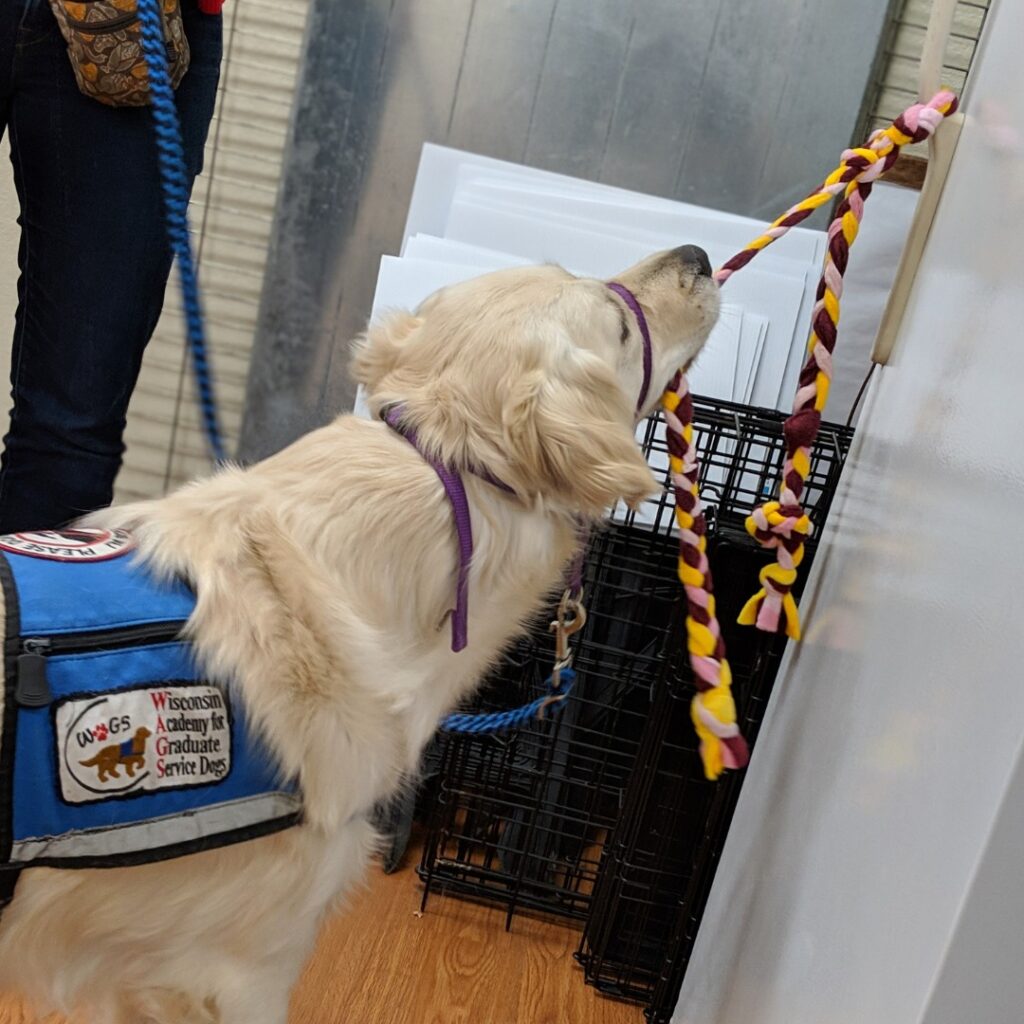
Image Source: wags.net
Deciphering Service Dog Eligibility in Wisconsin
Qualifying for a service dog in Wisconsin hinges on a clear understanding of what constitutes a service dog under the Americans with Disabilities Act (ADA), which Wisconsin adheres to. A service dog is not a pet; it is an animal individually trained to do work or perform tasks for the benefit of an individual with a disability. These tasks must be directly related to the person’s disability. This is a crucial distinction that separates service dogs from emotional support animals (ESAs).
What Tasks Can a Service Dog Perform?
Service dogs can be trained to perform a wide variety of tasks, including but not limited to:
- Mobility Assistance: Helping individuals maintain balance, retrieve dropped items, open doors, or even provide support for walking.
- Seizure Alert/Response: Alerting their handler to an impending seizure or providing assistance during or after a seizure.
- Diabetic Alert: Detecting changes in blood glucose levels and alerting their handler.
- Psychiatric Service Dogs: Performing tasks such as deep pressure therapy, interrupting self-harming behaviors, or fetching medication.
- Hearing Assistance: Alerting a deaf or hard-of-hearing handler to sounds like doorbells, alarms, or a baby’s cry.
- Vision Impairment Assistance: Guiding their handler through obstacles and around hazards.
- Allergy Detection: Alerting their handler to the presence of specific allergens.
It’s important to note that a dog does not need to be trained to perform every possible task. A single, specific task directly related to the disability is sufficient.
Emotional Support Animal Wisconsin vs. Service Dog
It is vital to differentiate between a service dog and an emotional support animal in Wisconsin. Emotional support animals provide comfort and companionship through their presence, but they are not trained to perform specific tasks related to a disability. Under the ADA, ESAs do not have the same public access rights as service dogs. While they may be permitted in housing under the Fair Housing Act if they are considered a reasonable accommodation, they are generally not allowed in public places where pets are prohibited. Service dogs, on the other hand, have extensive public access rights.
The Journey to Obtaining a Service Dog in Wisconsin
The process of acquiring a service dog is multifaceted and often requires patience and persistence. Here’s a breakdown of the essential steps.
Step 1: Identifying Your Needs and Disability
The first and most critical step is to clearly define how a service dog can specifically assist you with your disability.
- Consult Your Healthcare Provider: Discuss your disability and how a service dog might help with your doctor, therapist, or other medical professionals. They can provide documentation supporting your need for a service animal.
- Assess Your Daily Challenges: What specific tasks do you struggle with due to your disability that a trained dog could alleviate? Make a list. This list will be invaluable when discussing your needs with trainers and organizations.
- Consider the Commitment: Owning and training a service dog is a significant commitment. You must have the time, resources, and physical ability to care for and manage a dog, as well as continue its training.
Step 2: Finding a Reputable Service Dog Organization or Trainer
This is a crucial step to ensure you obtain a well-trained and properly matched service dog.
Reputable Service Dog Organizations Wisconsin
Several reputable organizations in Wisconsin and nationwide specialize in training and placing service dogs. These organizations often have rigorous selection processes for both dogs and clients.
- National Organizations with Wisconsin Chapters or Services: Many national organizations serve clients across states, including Wisconsin. They often have a strong track record and established training methodologies.
- Wisconsin-Based Organizations: Seek out organizations specifically located in Wisconsin that focus on service dog training and placement. Thoroughly research their accreditation, client testimonials, and success rates.
Finding a Service Dog Trainer Wisconsin
If you plan to train your own dog or work with a trainer for an already-owned dog, finding a skilled and ethical service dog trainer in Wisconsin is paramount.
- Look for Specialization: Seek trainers who have extensive experience with service dog training, not just general obedience.
- Inquire About Training Methods: Understand their approach to training. Positive reinforcement methods are generally considered the most effective and humane.
- Ask About Certifications and Affiliations: While there isn’t a single mandatory certification for service dog trainers, look for affiliations with recognized organizations or certifications that demonstrate their expertise.
- Request References: Speak with previous clients to gauge their satisfaction with the trainer’s services.
- Observe Training Sessions: If possible, observe a training session to see the trainer’s interaction with dogs and clients.
Service dog breeders Wisconsin also play a vital role. Reputable breeders focus on temperament, health, and genetics, which are essential for producing dogs well-suited for service work.
Step 3: The Application and Matching Process
Once you’ve identified potential organizations or trainers, you’ll typically go through an application and matching process.
- Application Review: Organizations will review your application to determine if you meet their criteria and if a service dog is appropriate for your needs.
- Home Study/Evaluation: Some organizations may conduct a home study or evaluation to assess your living environment and your ability to care for a service dog.
- Client Training: You will likely undergo extensive training with your assigned dog. This training covers task work, obedience, public access manners, and handler-dog relationship building.
- Dog Selection: The organization or trainer will carefully match you with a dog whose temperament, energy level, and breed are best suited to your lifestyle and specific needs.
Step 4: Formal Training and Task Work
The core of getting a service dog is the specialized training.
Service Dog Training Wisconsin
Service dog training Wisconsin encompasses several key areas:
- Basic Obedience: A strong foundation in obedience is essential for any dog, especially a service dog. This includes commands like sit, stay, come, down, and heel.
- Advanced Obedience: This involves more complex commands and responses, often in distracting environments.
- Task-Specific Training: This is the most critical part, where the dog learns to perform specific actions to mitigate the handler’s disability. For example, a psychiatric service dog might be trained to provide deep pressure therapy.
- Public Access Training: Service dogs must be impeccably behaved in public. This training ensures the dog can navigate various public settings without disruption, regardless of distractions. This is crucial for service dog access rights Wisconsin.
- Socialization: Proper socialization from a young age exposes the dog to different people, places, sounds, and experiences, making them more adaptable and confident.
Step 5: Legal Considerations and Documentation
While the ADA does not require registration or certification for service dogs, having proper documentation can be beneficial.
Service Dog Registration Wisconsin
Service dog registration Wisconsin is often misunderstood. The ADA does not mandate registration for service dogs. However, some handlers choose to register their dogs with private organizations. This registration often provides a vest, ID card, and sometimes a directory. It’s important to remember that these registrations are not legally required and do not grant any additional rights beyond what the ADA already provides.
- What is Required by the ADA? The ADA only requires that a service animal be individually trained to do work or perform tasks for the benefit of an individual with a disability.
- Documentation: While not required by law, having a letter from your doctor stating you have a disability and that a service dog would be beneficial can be helpful if questions arise about your dog’s status.
- Identification: Service dogs often wear vests or harnesses that clearly identify them as working animals. This is not mandatory but can help in public to signal the dog’s working status.
Step 6: Ongoing Training and Maintenance
Service dog training is not a one-time event. It’s an ongoing process to maintain the dog’s skills and adapt to changing needs.
- Refresher Training: Regularly practice obedience and task work to keep the dog’s skills sharp.
- Continued Socialization: Continue to expose your dog to new environments and experiences to maintain their composure and adaptability.
- Health and Wellness: Ensure your service dog receives regular veterinary care, proper nutrition, and appropriate exercise to stay healthy and perform their duties.
Understanding Service Dog Access Rights in Wisconsin
Service dog access rights Wisconsin are protected by federal law, primarily the Americans with Disabilities Act (ADA). This means that service dogs are allowed to accompany their handlers in virtually all public places.
What are Public Places?
Public places include, but are not limited to:
- Restaurants and bars
- Stores and shopping malls
- Hotels and lodging
- Theaters, sports stadiums, and amusement parks
- Government buildings and facilities
- Schools and universities
- Hospitals and doctor’s offices
- Parks and recreational areas
- Public transportation
Limitations on Access
There are very limited circumstances where a service dog may be excluded from a public place:
- Uncontrolled Behavior: If the dog is not house-trained or is out of control and the handler does not take effective action to bring it under control.
- Threat to Health or Safety: If the dog’s behavior or presence poses a direct threat to the health or safety of others that cannot be mitigated.
- Fundamental Alteration of Service: If allowing the dog would fundamentally alter the nature of the goods or services provided.
- No Pets Policy: Businesses cannot prohibit service dogs based on a “no pets” policy.
Inquiries Businesses Can Make
When a service dog is present, a business can only ask two specific questions:
- Is the dog a service animal required because of a disability?
- What work or task has the dog been trained to perform?
Businesses cannot ask about the person’s disability, require medical documentation, or ask the dog to demonstrate its task. They also cannot require the service dog to wear a vest or have special identification.
Disability Accommodations Service Dog
A service dog is a key component of disability accommodations service dog can provide. For individuals with disabilities, a service dog can significantly enhance independence, safety, and quality of life. The tasks performed by the service dog act as a direct accommodation for the limitations imposed by the disability.
Types of Service Dogs and Their Training Focus
Different disabilities require different types of service dogs, each with specialized training.
Mobility Assistance Dogs
These dogs are trained to help individuals with physical disabilities.
- Tasks: Retrieving dropped items, opening and closing doors, turning lights on/off, fetching medication, providing counterbalance for stability, assisting with transfers.
- Training Focus: Strength, balance, proprioception, precise object manipulation.
Psychiatric Service Dogs (PSDs)
PSDs assist individuals with mental and emotional disabilities.
- Tasks: Deep pressure therapy (DPPT) to calm anxiety, interrupting repetitive or self-harming behaviors, alerting to panic attacks, fetching medication or water, creating a physical barrier in crowds.
- Training Focus: Emotional regulation, scent detection (for some conditions), tactile stimulation, crisis intervention.
Hearing Dogs
These dogs alert deaf or hard-of-hearing individuals to important sounds.
- Tasks: Alerting to doorbells, phones ringing, smoke alarms, crying babies, or other auditory cues. They will physically nudge their handler and lead them to the source of the sound.
- Training Focus: Sound recognition, alerting behaviors, following complex directional cues.
Vision Dogs (Guide Dogs)
Guide dogs assist individuals who are blind or visually impaired.
- Tasks: Navigating obstacles, identifying safe paths, stopping at curbs and stairs, guiding around hazards, intelligent disobedience (refusing an unsafe command).
- Training Focus: Spatial awareness, obstacle avoidance, directional guidance, safe decision-making.
Medical Alert Dogs
These dogs are trained to detect and alert to specific medical conditions.
- Tasks: Alerting to changes in blood sugar levels (diabetic alert dogs), detecting oncoming seizures (seizure alert dogs), alerting to life-threatening allergic reactions (allergy alert dogs).
- Training Focus: Scent detection, precise timing of alerts, reliable communication of alerts.
Cost of Service Dogs in Wisconsin
The cost associated with obtaining and maintaining a service dog can be substantial.
Initial Costs
- Dog Acquisition: If purchased from a breeder, costs can range from \$500 to \$3,000+, depending on breed and lineage.
- Training Programs: Formal training programs through organizations can cost anywhere from \$15,000 to \$50,000 or more, often including the dog.
- Independent Trainer Fees: Hiring an independent service dog trainer can cost \$50-\$200+ per hour, with training often requiring hundreds of hours.
Ongoing Costs
- Food: High-quality dog food can cost \$50-\$100+ per month.
- Veterinary Care: Annual check-ups, vaccinations, parasite prevention, and unexpected illnesses or injuries can range from \$200 to \$1,000+ annually.
- Grooming: Professional grooming may be necessary depending on the breed, costing \$50-\$150+ per session.
- Supplies: Leashes, collars, vests, beds, toys, cleaning supplies, etc.
- Training Maintenance: Occasional refresher courses or specialized training.
Financial Assistance
- Grants and Non-Profits: Some non-profit organizations offer grants or financial assistance for service dog expenses.
- Veterans Affairs (VA): Eligible disabled veterans may receive assistance for service dogs through the VA.
- Insurance: While health insurance typically does not cover the cost of service dogs, some insurance plans may cover certain aspects of veterinary care.
Frequently Asked Questions (FAQ)
Q1: Do I need a doctor’s note to get a service dog in Wisconsin?
While not legally required by the ADA, a letter from your doctor confirming your disability and recommending a service dog can be helpful for your application process with training organizations and if any questions arise about your dog’s status in public.
Q2: Can I train my own dog to be a service dog in Wisconsin?
Yes, you can train your own dog. The ADA only requires that the dog be individually trained to perform tasks for your disability. However, this requires significant time, dedication, and knowledge of dog training, especially for specialized tasks and public access manners. Finding a qualified service dog trainer in Wisconsin is highly recommended.
Q3: Are there specific breeds that can be service dogs?
No, the ADA does not specify any particular breeds. Any dog breed can be a service dog, provided it has the right temperament and is successfully trained to perform tasks for a person with a disability.
Q4: Can I get a service dog for anxiety in Wisconsin?
Yes, if your anxiety substantially limits one or more major life activities, and a dog is trained to perform specific tasks to alleviate those limitations (e.g., deep pressure therapy, interrupting self-harming behaviors), then that dog can be a psychiatric service dog. This is distinct from an emotional support animal, which is not task-trained.
Q5: What is the difference between a service dog and an emotional support animal (ESA) in Wisconsin?
A service dog is trained to perform specific tasks that directly help a person with a disability. An emotional support animal provides comfort through its presence but is not task-trained. Service dogs have public access rights under the ADA, while ESAs generally do not.
Q6: Can businesses ask for proof of my service dog’s registration in Wisconsin?
No. Businesses cannot ask for proof of registration or certification for a service dog. They can only ask if the dog is a service animal required due to a disability and what tasks the dog has been trained to perform.
Q7: How long does it take to get a service dog?
The process can vary significantly. If you are placed with a dog from an organization, it can take 1-2 years from application to placement, including training. If you are training your own dog, the training period for specific tasks and public access can also take 1-2 years or more.
Q8: Where can I find reputable service dog organizations or trainers in Wisconsin?
Look for organizations accredited by Assistance Dog International (ADI) or those with strong reputations and positive client testimonials. You can also seek recommendations from disability advocacy groups or your healthcare providers. Always research thoroughly before committing.
By following these steps and conducting thorough research, individuals with disabilities in Wisconsin can navigate the process of obtaining a service dog and enhance their independence and quality of life.