
What is the ideal dog crate size for my dog? The right dog crate size ensures your dog has enough room to stand up, turn around, and lie down comfortably without feeling cramped. This blog post will delve into everything you need to know about canine crate size, ensuring your furry friend has adequate crate space for a comfortable and safe experience.
Image Source: assets.petco.com
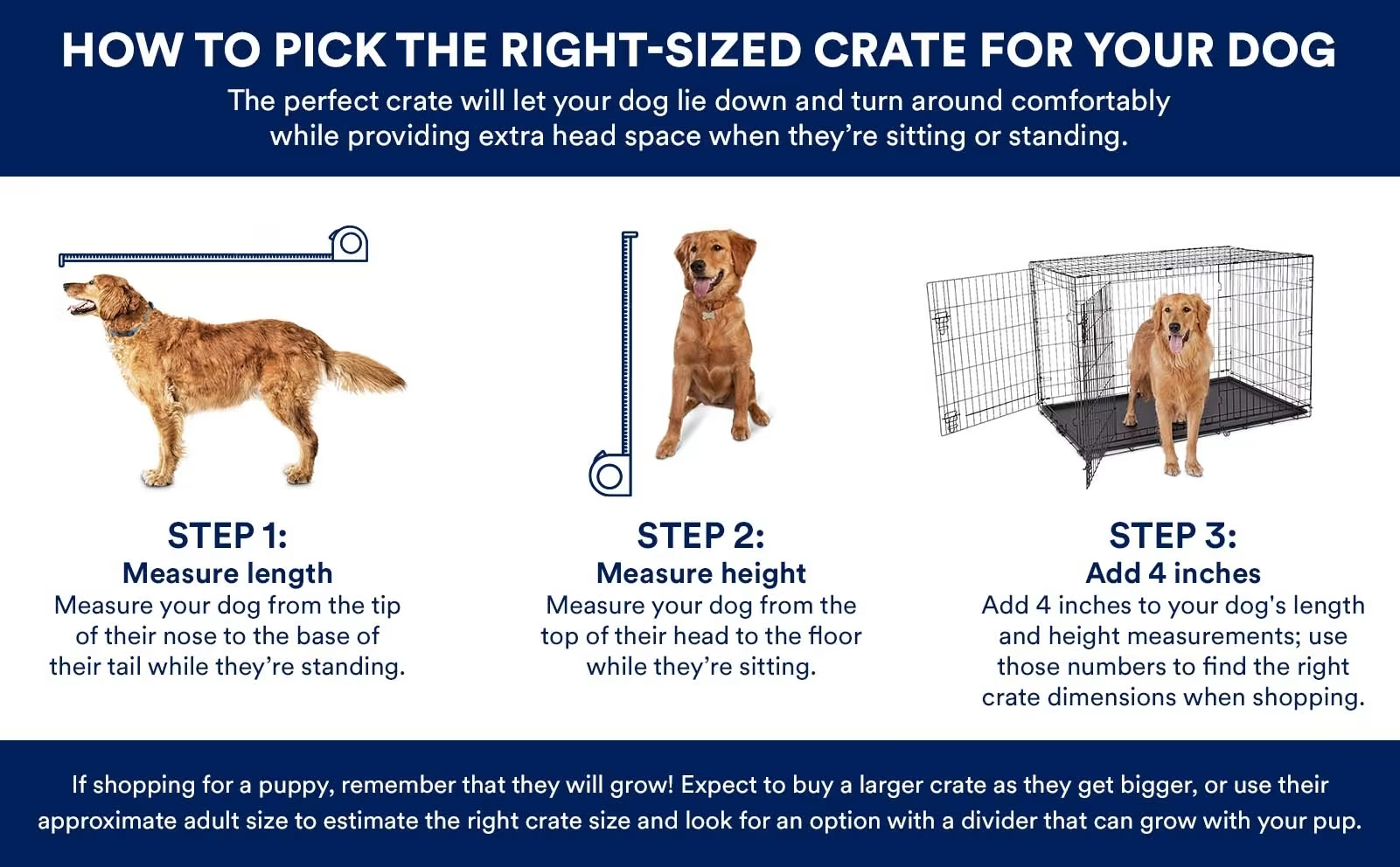
The Importance of Proper Dog Crate Sizing
Choosing the correct dog crate size is more than just a matter of comfort; it’s crucial for successful crate training and your dog’s overall well-being. A crate that is too large can undermine its effectiveness as a den-like sanctuary, potentially leading to accidents or making it harder for your dog to feel secure. Conversely, a crate that is too small can cause stress, discomfort, and even physical harm. Getting the dog crate measurements right from the start sets the foundation for positive associations with their personal space.
Why Size Matters for Your Canine Companion
A properly sized crate serves several vital purposes:
- Den-like Security: Dogs are naturally inclined to seek out enclosed, den-like spaces for safety and rest. An appropriately sized crate mimics this natural instinct, providing a secure retreat.
- House Training Aid: A crate helps with house training by tapping into a dog’s natural aversion to soiling their sleeping area. If the crate is too big, they might use a corner as a potty spot and still have plenty of clean space to sleep, defeating the purpose.
- Preventing Destructive Behavior: When left unsupervised, dogs can become bored or anxious, leading to chewing, digging, or other destructive behaviors. A crate offers a safe containment solution.
- Travel Safety: A secure crate ensures your dog is safe and comfortable during car rides or flights.
Deciphering Dog Crate Dimensions: The Golden Rules
To ensure your dog has adequate crate space, focus on a few key measurements. Your dog needs enough room for basic movements without feeling confined.
Key Measurements for a Comfortable Dog Crate
When measuring your dog for a crate, consider these points:
- Length: Measure your dog from the tip of their nose to the base of their tail. Add approximately 4-6 inches to this measurement. This allows them to stand up, turn around, and lie down comfortably.
- Height: Measure your dog from the top of their head to the floor. Add approximately 2-4 inches to this measurement. This ensures they can stand up straight without their head or ears touching the top of the crate.
- Width: Generally, the length measurement will adequately cover the width needed for turning around. However, ensure there’s enough width for them to comfortably lie on their side.
Practical Application: Creating the Ideal Dog Sleeping Space
Think about how your dog naturally sleeps. Do they curl up in a tight ball, or do they stretch out? The crate dimensions for dogs should accommodate their preferred sleeping position, allowing for natural movement.
- Curled up: Even a dog that curls up needs space to uncurl and shift positions.
- Stretched out: Dogs that sprawl out will need a longer crate.
A good rule of thumb is that if your dog can easily turn around in the crate, they likely have enough room to lie down comfortably.
Factors Influencing Dog Crate Size Choices
Beyond basic measurements, several factors influence the ideal dog kennel space for your pet.
Breed and Size Guides
Different breeds have vastly different body shapes and sizes. What works for a Greyhound will not work for a Bulldog.
Small Breed Dog Crate Size
For breeds like Chihuahuas, Yorkshire Terriers, and Pugs, shorter crates with smaller footprints are typically sufficient.
Medium Breed Dog Crate Size
Breeds such as Beagles, Border Collies, and Basset Hounds will require a moderately sized crate.
Large Breed Dog Crate Size
For breeds like Labrador Retrievers, German Shepherds, and Golden Retrievers, larger and sturdier crates are necessary.
Giant Breed Dog Crate Size
Great Danes, Mastiffs, and Saint Bernards need exceptionally large and robust crates to accommodate their considerable size.
Puppy Crate Size Considerations
When it comes to puppy crate size, it’s a bit of a balancing act. Puppies grow rapidly, and buying a crate that’s too small for their adult size means you’ll need to replace it sooner. However, a crate that’s too large for a puppy can lead to accidents.
The Divider Solution
Many wire and plastic crates come with a divider panel. This allows you to adjust the crate size as your puppy grows. Start with a divider that creates just enough space for your puppy to stand, turn, and lie down comfortably. As they grow, you can move the divider to increase the usable space. This is a cost-effective way to manage puppy crate sizing.
Age and Temperament
- Age: A puppy needs space to grow. An adult dog has reached their full size.
- Temperament: An anxious dog might feel more secure in a slightly snugger space, while a very active dog will need more room to move.
Types of Dog Crates and Their Sizing Nuances
The type of crate you choose can also influence the dog crate dimensions you’ll need to consider.
Wire Crates
Wire crates are popular for their visibility and ventilation. They often come with a plastic divider.
- Pros: Excellent ventilation, allows your dog to see out, generally lighter and portable.
- Cons: Can be noisy, might not be as secure for chewers or escape artists, some dogs find them less den-like.
- Sizing: Standard sizing guidelines apply. Ensure the wire spacing isn’t so wide that a small puppy could get stuck.
Plastic/Plastic Molded Crates
These are often favored for travel and are sometimes referred to as “airline crates.”
- Pros: More den-like for some dogs, can be quieter, generally more secure.
- Cons: Less ventilation, heavier, can limit visibility.
- Sizing: Measure carefully. The internal dimensions might be slightly smaller than external ones due to the molding.
Soft-Sided Crates
These are made of fabric and are lightweight and portable.
- Pros: Very portable, good for travel and occasional use, can feel cozy.
- Cons: Not suitable for strong chewers or dogs prone to escaping, offer less structural integrity.
- Sizing: Ensure the fabric is durable. The internal dimensions are usually quite close to the external.
Wooden Crates/Dog Houses
These offer a more furniture-like appearance.
- Pros: Aesthetically pleasing, can provide good insulation.
- Cons: Can be heavy and difficult to move, may require more cleaning, solid sides can limit visibility and ventilation if not designed well.
- Sizing: Similar principles to plastic crates – check internal dimensions.
Measuring Your Dog: A Step-by-Step Guide
Taking accurate measurements is the first step to finding the perfect dog crate size.
Step 1: Gather Your Supplies
You’ll need a flexible measuring tape (like one used for sewing) or a regular string and ruler.
Step 2: Measure Length
- Have your dog stand naturally.
- Measure from the tip of their nose to the base of their tail (where the tail meets the body).
- Add 4-6 inches to this measurement.
Step 3: Measure Height
- Have your dog stand naturally.
- Measure from the top of their head to the floor.
- Add 2-4 inches to this measurement.
Step 4: Measure Width
- While your dog is standing, measure them at their widest point. This is usually across the shoulders or hips.
- Ensure the length measurement adequately provides enough space for them to turn around, which typically covers the width.
Creating the Perfect Dog Kennel Space: More Than Just Measurements
While dog crate measurements are vital, other elements contribute to a truly comfortable dog crate.
Bedding and Comfort
- Crate Mats: Padded mats provide cushioning and warmth.
- Blankets: Soft blankets can make the crate feel more like a den.
- Avoid Overstuffing: Too much bedding can take up valuable space and may be an invitation for destruction if your dog is a chewer.
Location, Location, Location
The placement of the crate is as important as the dog sleeping space itself.
- Quiet Area: Choose a spot away from high-traffic areas and loud noises.
- Family Proximity: Place the crate in a room where the family spends time, so your dog doesn’t feel isolated.
- Avoid Drafts: Ensure the crate isn’t placed near doors or windows that create drafts.
Troubleshooting Common Dog Crate Sizing Issues
Sometimes, even with careful measurements, a crate might not feel quite right.
My Crate is Too Big
If you’re using a divider and your dog is having accidents in the crate, it’s likely too large for their current size. Reduce the usable space with the divider. If you don’t have a divider, consider purchasing one or using large, sturdy items to block off excess space.
My Crate is Too Small
If your dog can’t stand up fully, turn around, or lie down comfortably, the crate is too small. You’ll need to upgrade to a larger size.
My Dog Doesn’t Like Their Crate
This is often a sizing issue, but can also be related to how crate training was introduced.
- Positive Association: Ensure the crate is a positive place. Feed meals in the crate, give treats, and praise your dog for entering.
- Gradual Introduction: Never force your dog into the crate. Let them explore it at their own pace.
- Time Limits: Start with very short periods and gradually increase the time.
Recommendations for Dog Crate Purchases
When shopping for a crate, consider these dog crate recommendations:
Durability and Safety
- Sturdy Construction: Choose crates made from high-quality materials that won’t bend or break easily.
- Secure Latches: Ensure latches are strong and dog-proof.
- Non-Toxic Materials: For plastic crates, ensure they are made from pet-safe plastics.
Ease of Cleaning
A crate that can be easily wiped down or has removable trays will save you a lot of hassle.
Portability
If you plan to travel with your dog, a lighter and more foldable crate will be beneficial.
Sample Dog Crate Sizing Chart
Here is a general guideline, but always measure your individual dog. These are approximate recommendations for common breeds and can help with dog crate recommendations:
| Breed Category | Example Breeds | Approximate Height (in) | Approximate Length (in) | Recommended Crate Size (in) (L x W x H) |
|---|---|---|---|---|
| Small | Chihuahua, Yorkshire Terrier, Shih Tzu | 8-12 | 10-15 | 24L x 18W x 16H |
| Medium-Small | Dachshund, Pug, Beagle | 12-16 | 18-24 | 30L x 19W x 21H |
| Medium | Border Collie, Bulldog, Basset Hound | 16-20 | 24-30 | 36L x 23W x 25H |
| Medium-Large | Labrador Retriever, Golden Retriever, Boxer | 20-24 | 30-36 | 42L x 28W x 30H |
| Large | German Shepherd, Rottweiler, Doberman | 24-28 | 36-42 | 48L x 29W x 32H |
| Extra Large | Great Dane, Mastiff, Saint Bernard | 28+ | 42+ | 54L x 35W x 38H (or larger) |
Note: Always measure your dog to confirm. These are general guidelines and individual dogs may vary.
Frequently Asked Questions About Dog Crate Sizing
Q1: How do I measure my dog for a crate if they won’t stand still?
Try measuring when your dog is relaxed or sleeping. You can also use a piece of string to trace their outline while they are standing, then measure the string with a ruler. Treats and a helper can also make the process easier.
Q2: Can I buy a crate that my puppy will grow into?
Yes, but it’s best to use a crate divider to adjust the space as they grow. A crate that is too large for a puppy can hinder house training and make them feel insecure.
Q3: What if my dog is an unusual shape for their breed?
Always rely on your dog’s individual measurements rather than just their breed. Some breeds have variations in build.
Q4: How much space does a dog need to turn around in their crate?
They should have enough room to turn 360 degrees without their body or tail hitting the sides or top.
Q5: Is there a difference in canine crate size recommendations for different types of crates?
Generally, the same principles apply, but you might want to check the internal dimensions of plastic or molded crates as they can be slightly smaller than the external measurements.
Q6: How do I ensure my dog has enough dog sleeping space within the crate?
Ensure they can lie down fully stretched out on their side. While they might curl up to sleep, they should have the option to stretch.
Q7: What are the best dog crate recommendations for a nervous dog?
Consider a crate that feels more enclosed, like a plastic molded crate, and place it in a quiet, secure part of your home. Using a cover can also help create a more den-like atmosphere.
Q8: My dog seems uncomfortable in their crate. What could be wrong?
It could be the size. If they can’t stand, turn, or lie down comfortably, it’s too small. If they are having accidents or seem to be using one end as a potty area, it might be too large. Ensure they have a soft bed but not so much bedding that it reduces usable space.
Q9: What is considered adequate crate space?
Adequate crate space is enough room for your dog to stand up, turn around, and lie down in a natural position without being restricted.
Q10: What are some good puppy crate size strategies?
Using a crate with a divider is the most common and effective strategy. It allows you to adjust the space as your puppy grows, ensuring they have a comfortable and appropriately sized den at every stage.
By following these guidelines and taking accurate measurements of your dog, you can select the perfect dog crate size that promotes safety, comfort, and a positive experience for your beloved pet.