
What is the ideal dog fence height? The ideal dog fence height depends on your dog’s breed, size, jumping ability, and digging habits, but a general guideline for a safe dog fence height is at least 4 to 6 feet. This blog post will delve into dog fence height recommendations to help you choose the appropriate dog fence height for your furry friend and ensure they stay safely within your yard. We’ll explore factors to consider, from the minimum dog fence height to the maximum dog fence height, and provide practical advice for dog containment fence height.
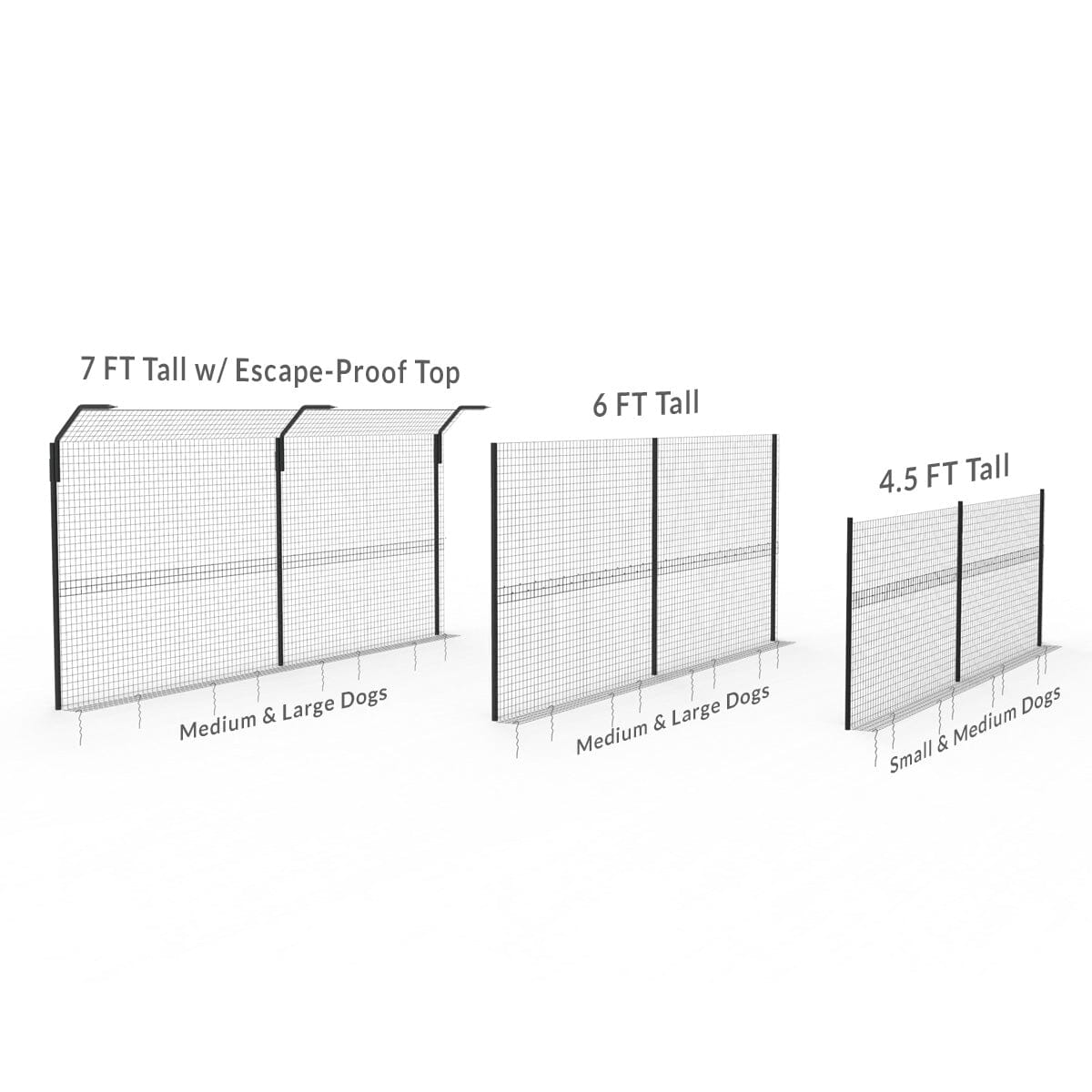
Image Source: www.dogproofer.com
Fathoming Your Dog’s Needs: The Foundation of Fence Height
Selecting the right dog fence height isn’t a one-size-fits-all decision. It’s a thoughtful process rooted in understanding your individual dog. Factors like breed characteristics, individual athleticism, and even personality play a crucial role. Overlooking these nuances can lead to frustrating escapes and potential safety hazards for your beloved pet.
Breed Matters: A Starting Point for Height Selection
Certain breeds are naturally more athletic and agile than others. A Jack Russell Terrier, known for its boundless energy and surprising jumping prowess, will require a different dog fence height than a Basset Hound.
- High Jumpers: Breeds like Border Collies, Australian Shepherds, German Shepherds, and many sighthounds (e.g., Greyhounds, Whippets) possess impressive leaping abilities. For these breeds, a minimum dog fence height of 6 feet is often recommended, and in some cases, even higher may be necessary.
- Agile Climbers: While not as common, some breeds with dexterity might try to scramble over fences. While less about pure height, this highlights the importance of a sturdy, climb-resistant design.
- Diggers: Breeds prone to digging, such as Dachshunds, Terriers, and Beagles, might not be deterred by height alone. The fence needs to extend below ground level or have a barrier to prevent tunneling.
Your Dog’s Personal Prowess: Beyond the Breed Standard
Even within a breed, individual dogs can vary significantly in their physical capabilities and determination.
- Athleticism: Is your dog a couch potato or an Olympic hopeful? A dog that regularly plays fetch with enthusiastic leaps or enjoys agility training will likely be more capable of clearing a fence than a less active dog.
- Previous Escape Attempts: If your dog has a history of escaping your current yard or previous enclosures, you need to consider their learned behaviors. They might be more motivated and creative in their attempts.
- Motivation: What drives your dog to escape? Is it boredom, a desire to chase wildlife, or an urge to find a mate? Understanding the motivation can help you reinforce the fence’s effectiveness.
Estimating Dog Fence Height: A Practical Approach
To accurately estimate the appropriate dog fence height, observe your dog in action.
- Jumping Tests: While supervised, see how high your dog jumps for toys or when excited. This provides a real-world indicator of their potential.
- Observing Other Fences: If you know other owners of similar breeds with successful fencing, ask for their recommendations.
- Consulting Professionals: Veterinarians, dog trainers, and experienced breeders can offer valuable insights based on their knowledge of specific breeds and canine behavior.
Decoding Dog Fence Height Recommendations
The general consensus among dog experts and owners leans towards a higher fence to ensure safety and prevent escapes. However, the exact measurements can fluctuate based on the factors we’ve discussed.
Minimum Dog Fence Height: A Baseline for Safety
For most medium to large breeds, a minimum dog fence height of 4 feet is considered the absolute baseline. However, this is often insufficient for more athletic or determined dogs.
- Small Dogs: For smaller breeds and less agile dogs, a 3-foot fence might suffice, but even then, consider the dog’s potential to jump or squeeze through gaps.
- Medium Dogs: A 4-foot fence is a common starting point for many medium-sized breeds. However, if your medium-sized dog is particularly athletic or curious, you might need to upgrade.
- Large & Athletic Dogs: For larger breeds or those with a known tendency to jump, a 5-foot fence is a more secure option.
The Sweet Spot: Appropriate Dog Fence Height
The appropriate dog fence height is the one that reliably contains your dog without being excessively tall or costly. For many owners of active dogs, this often falls between 5 and 6 feet.
- 5-Foot Fences: A 5-foot fence is a strong recommendation for many breeds that are moderately active or possess moderate jumping abilities. It offers a good balance of security and practicality.
- 6-Foot Fences: This is often considered the gold standard for containing athletic breeds, strong jumpers, and determined escape artists. A 6-foot fence provides a significant barrier that is difficult for most dogs to overcome.
Maximum Dog Fence Height: When More is Merrier
While there isn’t a strict maximum dog fence height imposed by regulations for private residences, exceeding 6 feet might be unnecessary and can sometimes create an aesthetically unpleasing barrier. However, in specific situations, such as containing very large, powerful breeds or dogs with extreme escape tendencies, a taller fence might be considered. Always check local zoning laws for any height restrictions on fences in your area.
Beyond Height: Essential Considerations for Dog Containment
While dog fence height is paramount, it’s not the only factor in successful dog containment. A tall fence with weak points is still an invitation for an escape.
Material Matters: Durability and Strength
The material of your pet fence height choice significantly impacts its effectiveness.
- Wood Fences: Offer privacy and can be very sturdy. However, they can be susceptible to rot and require regular maintenance. Ensure the pickets are close enough to prevent squeezing through.
- Vinyl Fences: Low maintenance and durable. Ensure the vinyl is thick and sturdy enough to withstand your dog’s force if they lean or push against it.
- Chain-Link Fences: A common and relatively affordable option. Ensure the mesh is small enough to prevent your dog from getting its head or paws stuck. Taller chain-link fences are readily available.
- Metal/Wrought Iron Fences: Aesthetically pleasing but can be expensive. Ensure the spacing between bars is appropriate for your dog’s size.
- Wire Mesh Fences: Often used for creating custom enclosures or reinforcing existing fences. Look for heavy-gauge wire mesh for durability.
Fence Design: Preventing Exploitation
Even the perfect dog fence height can be defeated by poor design.
- No Gaps: Ensure there are no gaps at the bottom of the fence where a dog could dig under or squeeze through.
- Sturdy Posts: Properly installed and reinforced fence posts are crucial. Weak posts can be pushed over by a determined dog.
- Gate Security: Gates are common weak points. Ensure they latch securely and have a mechanism that your dog cannot easily manipulate.
- Anti-Climb Additions: For exceptionally agile dogs, consider adding features like rollers at the top of the fence or angled extensions to deter climbing.
Burying the Base: Counteracting Diggers
If your dog is a persistent digger, simply increasing the backyard dog fence height won’t be enough.
- Burying the Fence: Burying the bottom edge of the fence at least 6-12 inches into the ground can deter most digging attempts.
- L-Footer: A common technique involves attaching a wire mesh or chicken wire in an “L” shape along the bottom of the fence, extending outward into the yard. This forces digging dogs to hit the wire, discouraging them.
- Concrete Base: Pouring a concrete footer along the base of the fence offers a robust barrier against digging.
Invisible Fences: A Different Approach to Dog Containment
Invisible fences, also known as electronic fences or containment systems, offer an alternative to traditional barriers. They consist of a buried wire that creates a boundary. When a dog approaches the boundary, a warning beep sounds, followed by a mild static correction if they continue.
- Pros: Can be less visually intrusive, may be more affordable for large areas, and can be effective for dogs trained to respect the boundaries.
- Cons: Not suitable for all dogs (especially those with high pain tolerance or extreme escape drives). They do not prevent other animals or people from entering your yard. There’s always a risk of equipment malfunction or battery failure. Proper training and fitting of the collar are essential. The appropriate dog fence height is less of a factor here, but the effectiveness relies on the dog’s response to the system.
Installing and Maintaining Your Dog Fence
The best dog containment fence height is only effective if properly installed and maintained.
Professional Installation vs. DIY
- Professional Installation: Ensures correct depth for posts, proper tensioning of materials, and secure gate installation. This is often recommended for ensuring the long-term integrity of your dog containment fence height.
- DIY Installation: Can save money but requires careful planning, the right tools, and a good understanding of fence building principles. Mistakes can compromise the fence’s effectiveness.
Regular Inspections: Catching Problems Early
Periodically walk the perimeter of your fence and inspect it for any signs of damage or wear.
- Check for Loose Panels or Posts: A slight wobble can indicate a problem that needs immediate attention.
- Inspect for Rust or Rot: These can weaken the fence structure.
- Examine the Base: Look for any signs of digging or gaps that may have appeared.
- Test Gates: Ensure latches are functioning correctly and the gates are closing securely.
Common Questions About Dog Fence Height
Here are some frequently asked questions about dog fence height recommendations to further clarify the process of choosing the right barrier for your canine companion.
Frequently Asked Questions (FAQ)
Q1: What is the minimum dog fence height for a small dog?
A1: For most small dogs, a minimum dog fence height of 3 feet can be sufficient, provided they are not athletic jumpers or diggers. However, always consider their individual temperament and jumping ability. A 4-foot fence offers extra security.
Q2: Can I use an invisible fence if my dog is a known escape artist?
A2: While invisible fences can work for some dogs, they are generally not recommended for persistent escape artists. Such dogs may ignore the correction or be motivated enough to tolerate it to get out. A physical fence is usually a more reliable solution for these cases.
Q3: How tall should a fence be for a German Shepherd?
A3: German Shepherds are intelligent and athletic dogs. A safe dog fence height for a German Shepherd is typically at least 5 feet, and a 6-foot fence is often recommended, especially if they are prone to jumping or have shown escape behaviors.
Q4: Do I need to worry about the maximum dog fence height for my yard?
A4: While there isn’t a universal maximum dog fence height for private yards, it’s important to check local zoning ordinances. In most residential areas, fences over 6 feet may require special permits or be disallowed due to aesthetic or safety concerns.
Q5: What is the best backyard dog fence height for preventing escapes?
A5: The best backyard dog fence height is one that is at least 1-2 feet taller than your dog’s standing reach when they are on their hind legs, or at least 4-6 feet for most breeds. For athletic breeds, 6 feet is a safer bet.
Q6: How do I determine the appropriate dog fence height for my mixed-breed dog?
A6: Estimating dog fence height for a mixed-breed dog involves assessing the characteristics of their dominant breeds and observing your dog’s individual traits. Look at their size, weight, agility, jumping ability, and any history of escape attempts. When in doubt, err on the side of a taller fence.
Q7: Are there specific considerations for a pet fence height for puppies?
A7: Puppies grow quickly, so it’s wise to consider their adult size when choosing a pet fence height. While a shorter fence might suffice for a young puppy, you’ll likely need to upgrade as they mature. Investing in a taller fence from the start can save you money and hassle in the long run.
By carefully considering your dog’s individual needs and following these dog fence height recommendations, you can create a secure and safe outdoor environment for your canine companion, minimizing the risk of escapes and ensuring their well-being.