
Can you leave a dog alone all day while at work? Ideally, no, but if you must, the key is preparation and providing enough mental and physical stimulation to prevent boredom and destructive behaviors. This guide will offer comprehensive dog boredom solutions and dog entertainment at home, ensuring your furry friend stays happy and engaged even when you’re away.
Leaving your dog home alone for extended periods can be challenging. Many owners worry about their dog’s well-being, potential destructiveness, and the development of separation anxiety. Fortunately, with careful planning and the right strategies, you can significantly improve your dog’s experience. This article delves into effective ways to keep your dog occupied while you’re at work, transforming a potentially stressful situation into a manageable one. We’ll cover everything from essential environmental changes to engaging toys and professional services, providing you with a toolkit to combat canine boredom and promote a happier, healthier dog.
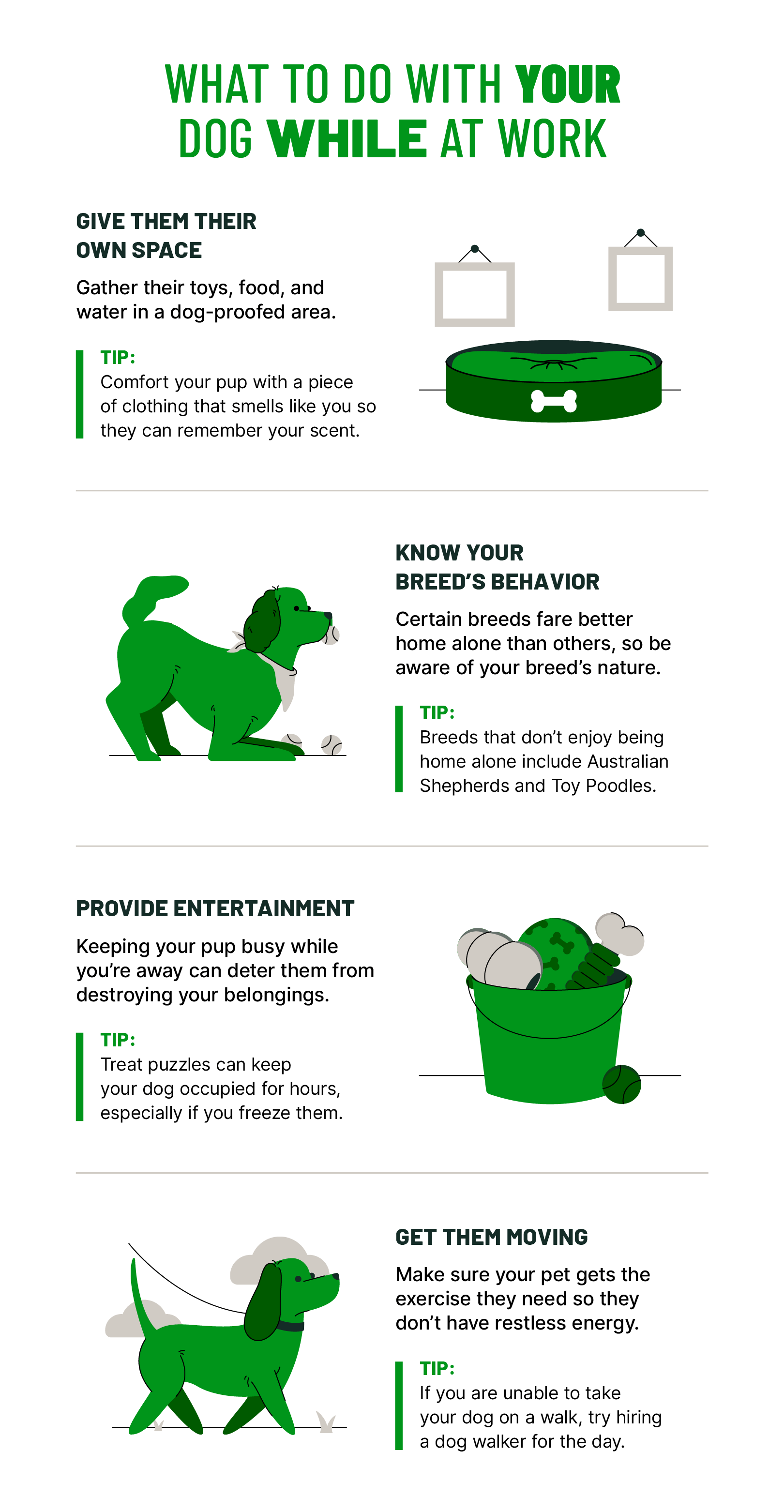
Image Source: www.hippo.com
Creating a Dog-Friendly Workspace at Home
Before you even think about toys, consider the environment. Your dog needs a safe, comfortable, and stimulating space to spend their day. This isn’t just about providing a bed; it’s about curating an experience.
Designing a Safe Den
A den is more than just a place to sleep; it’s a sanctuary. For puppies, especially those struggling with puppy separation anxiety, a den can offer a sense of security.
- Crate Training: A properly introduced crate can become a positive space. Ensure it’s the right size – large enough for your dog to stand up, turn around, and lie down comfortably, but not so large they can use one end as a potty area.
- Designated Area: If crating isn’t an option, designate a safe room or a comfortable corner of a room. Puppy-proof the area thoroughly, removing any hazards like electrical cords, toxic plants, or small objects they could swallow.
- Comfort is Key: Provide a soft, washable bed or blankets. Make the space inviting with familiar scents.
Environmental Enrichment
Beyond the immediate den, the broader home environment can be a source of stimulation.
- Window Views: If safe and accessible, a window perch can offer hours of entertainment. Your dog can watch the world go by, observe squirrels, and experience visual stimulation. Ensure windows are secure and the area is free from anything they can knock over.
- Background Noise: Some dogs find comfort in human voices or soft music. Consider leaving a radio or television on at a low volume. Dog-specific music channels or calming podcasts can also be beneficial.
Top Dog Entertainment at Home: Engaging Their Minds and Bodies
The right dog toys for alone time are crucial. They should be engaging, safe, and varied to keep your dog interested.
Interactive Dog Puzzles and Food-Dispensing Toys
These are gold stars for dog mental stimulation. They challenge your dog to work for rewards, keeping their minds sharp and preventing destructive behavior born from boredom.
- KONGs: A classic for a reason. Stuff a KONG with kibble, peanut butter, yogurt, or wet food. Freeze it to make it last longer. This provides a rewarding challenge that can occupy a dog for a significant amount of time.
- Puzzle Feeders: Various brands offer puzzles where dogs must slide, lift, or spin compartments to access treats or kibble. These range from beginner to advanced levels.
- Slow Feeder Bowls: Even regular meals can become a form of entertainment if dispensed from a slow feeder bowl, making your dog work a bit harder to eat.
Safe Dog Chew Toys
Chewing is a natural stress reliever for dogs. Providing safe and appropriate chew toys is essential.
- Durable Rubber Chews: Brands like Benebone or Nylabone offer durable options that can withstand vigorous chewing.
- Antlers and Natural Chews: These can be great options, but always supervise your dog with new types of chews to ensure they don’t splinter or break off in large pieces.
- Stuffable Dental Chews: These provide both a chewing outlet and a way to clean teeth.
Sniffing and Foraging Games
Engage your dog’s powerful sense of smell.
- Scatter Feeding: Instead of feeding meals in a bowl, scatter kibble around a room or in their designated safe space. This encourages natural foraging behavior.
- Snuffle Mats: These mats have fabric strips where you can hide kibble or treats, requiring your dog to use their nose to find them.
The Power of Rotation: Keeping Toys Fresh and Exciting
A common mistake is leaving all toys out all the time. This leads to them becoming mundane.
- Toy Rotation Schedule: Implement a system where you rotate toys daily or weekly. Put some away and bring others out. This makes the “new” toys feel exciting again.
- Interactive vs. Solo Play: Ensure you have a mix of toys that your dog can play with alone and toys that are typically used for interactive play with you. Save the highly stimulating interactive toys for when you are home to maximize their impact.
Exercise: The Foundation of a Happy, Less Anxious Dog
A tired dog is a good dog. Adequate physical exercise before you leave can drastically reduce boredom and anxiety.
Pre-Work Exercise Routine
- Morning Walk: A brisk walk before you leave can burn off excess energy.
- Play Session: A vigorous game of fetch or tug-of-war can be very effective.
- Training Session: Even a short 5-10 minute training session can be mentally tiring and fulfilling.
Post-Work Reconnection
- Immediate Engagement: When you return, make sure to greet your dog and engage with them immediately. This reinforces that your return is a positive event.
- Evening Activity: Plan for an extended walk, play session, or training in the evening to further tire them out and strengthen your bond.
Addressing Separation Anxiety and Boredom
For dogs prone to separation anxiety or extreme boredom, a multi-pronged approach is best.
Gradual Departures and Arrivals
- Practice Leaving: Start by leaving for very short periods (a few minutes) and gradually increase the time. Reward calm behavior upon your return.
- Low-Key Greetings: Avoid overly excited greetings when you leave or arrive. This can heighten the emotional response to your comings and goings.
Desensitization Techniques
- Mimic Departure Cues: Pick up your keys, put on your coat, and then sit back down. Do this randomly throughout the day so these actions don’t automatically trigger anxiety.
- Counter-Conditioning: Pair your departure cues with positive experiences, like giving your dog a special long-lasting treat or toy just before you leave.
Exploring Dog Daycare Alternatives and Professional Services
When your dog’s needs exceed what you can provide at home, consider professional help.
Dog Daycare: Pros and Cons
- Pros: Socialization, ample exercise, constant supervision, reduction of at-home boredom.
- Cons: Can be expensive, potential for overstimulation or illness, not all dogs thrive in a group setting.
- Choosing a Facility: Look for reputable facilities with experienced staff, good reviews, and a clean environment. A trial day is recommended.
Dog Walker Services
- Mid-day Breaks: Hiring a dog walker for a mid-day walk and potty break can be a lifesaver for dogs left alone for long hours. This breaks up the day and provides essential physical activity.
- Benefits: Reduces potty accidents, provides exercise, offers social interaction with the walker.
Pet Sitter Services
- In-Home Visits: A pet sitter can visit your home to feed, walk, play with, and generally check in on your dog. This is often less stressful than daycare for some dogs.
- Customized Care: Pet sitters can tailor their visits to your dog’s specific needs and routine.
Preparing Your Dog for Your Absence: A Checklist
To ensure a smooth day for your dog, preparation is key.
- Morning Routine: Ensure a good walk and potty break before you leave.
- Food and Water: Provide fresh water. Consider feeding a meal just before you leave, as a full belly can encourage napping.
- Safe Space: Ensure their den or safe area is comfortable and well-stocked with appropriate toys.
- Minimize Excitement: Keep departures calm.
- Sound Machines/Music: Turn on calming music or a white noise machine.
- Secure the Home: Ensure windows are closed and latched, and all potential hazards are removed.
A Day in the Life: Sample Schedules
Here’s how you might structure your dog’s day:
Scenario 1: Dog is comfortable being alone for 8 hours
- 6:30 AM: Wake up, potty break.
- 7:00 AM: Morning walk (30-45 minutes), includes some fetch or training.
- 7:45 AM: Breakfast in a puzzle feeder.
- 8:00 AM: Give a stuffed KONG.
- 8:15 AM: Depart for work.
- 8:15 AM – 4:15 PM: Dog has access to safe space, rotation of chew toys, and the KONG. Window access if available.
- 4:15 PM: Arrive home. Enthusiastic greeting, potty break.
- 4:30 PM: Evening play session or longer walk.
Scenario 2: Dog has mild separation anxiety or gets bored easily
- 6:00 AM: Wake up, potty break.
- 6:30 AM: Brisk walk (45 minutes) with varied paces and commands.
- 7:15 AM: Breakfast from a snuffle mat.
- 7:30 AM: Give a stuffed KONG or a durable puzzle toy.
- 7:45 AM: Calming music/white noise machine on.
- 8:00 AM: Depart for work.
- 10:00 AM: Dog walker arrives for a 30-minute walk and play session.
- 10:30 AM – 3:00 PM: Dog rests, possibly with a different chew toy.
- 3:00 PM: Dog walker returns for a quick potty break or a short play session.
- 3:30 PM: Depart for work.
- 4:30 PM: Arrive home. Calm greeting, potty break.
- 5:00 PM: Extended evening walk or agility practice.
Frequently Asked Questions (FAQ)
Q1: How long can I realistically leave a dog alone?
A: This varies greatly by age, breed, temperament, and training. Puppies under 6 months should not be left alone for more than 2-4 hours. Adult dogs with good potty training and who are not prone to separation anxiety can often handle 6-8 hours, but this is the absolute maximum. Anything longer requires intervention like a dog walker or doggy daycare.
Q2: What are the signs my dog is bored or has separation anxiety?
A: Signs of boredom include destructive chewing, excessive barking or howling, digging, and lethargy. Signs of separation anxiety can include excessive vocalization, destructive behavior (often around exits), house soiling, pacing, drooling, and attempting to escape.
Q3: Is it safe to leave my dog with a bunch of toys?
A: Yes, as long as the toys are safe and appropriate for your dog. Always supervise new toys to ensure they don’t break into small pieces that could be a choking hazard or cause internal blockages. Avoid toys with small, easily detachable parts.
Q4: Will leaving the TV or radio on help my dog?
A: For some dogs, yes. The sound of human voices or music can be comforting and mask outside noises that might otherwise cause anxiety or excitement. There are also specific “dog TV” channels and calming music playlists designed for pets.
Q5: My dog destroys everything when I leave. What can I do?
A: This is a common sign of boredom or separation anxiety. First, ensure your dog is getting enough physical and mental exercise before you leave. Then, focus on providing high-value, long-lasting distractions like stuffed KONGs or interactive puzzles. Consider a dog walker or daycare if the problem persists. If it’s severe separation anxiety, consult a professional dog trainer or a veterinary behaviorist.
By implementing these strategies, you can ensure your dog remains happy, engaged, and well-behaved while you’re away at work, transforming potentially lonely hours into an opportunity for enrichment and comfort.