
Can you leave your dog alone while at work? Yes, you can, but it requires preparation and a proactive approach to ensure their well-being and prevent boredom. Leaving a dog alone for extended periods without mental and physical stimulation can lead to destructive behaviors, anxiety, and overall unhappiness. Fortunately, there are many effective dog boredom solutions and dog enrichment strategies you can implement. This comprehensive guide will explore how to keep your canine companion happy and engaged while you’re away, ensuring they thrive even when you’re not physically present.
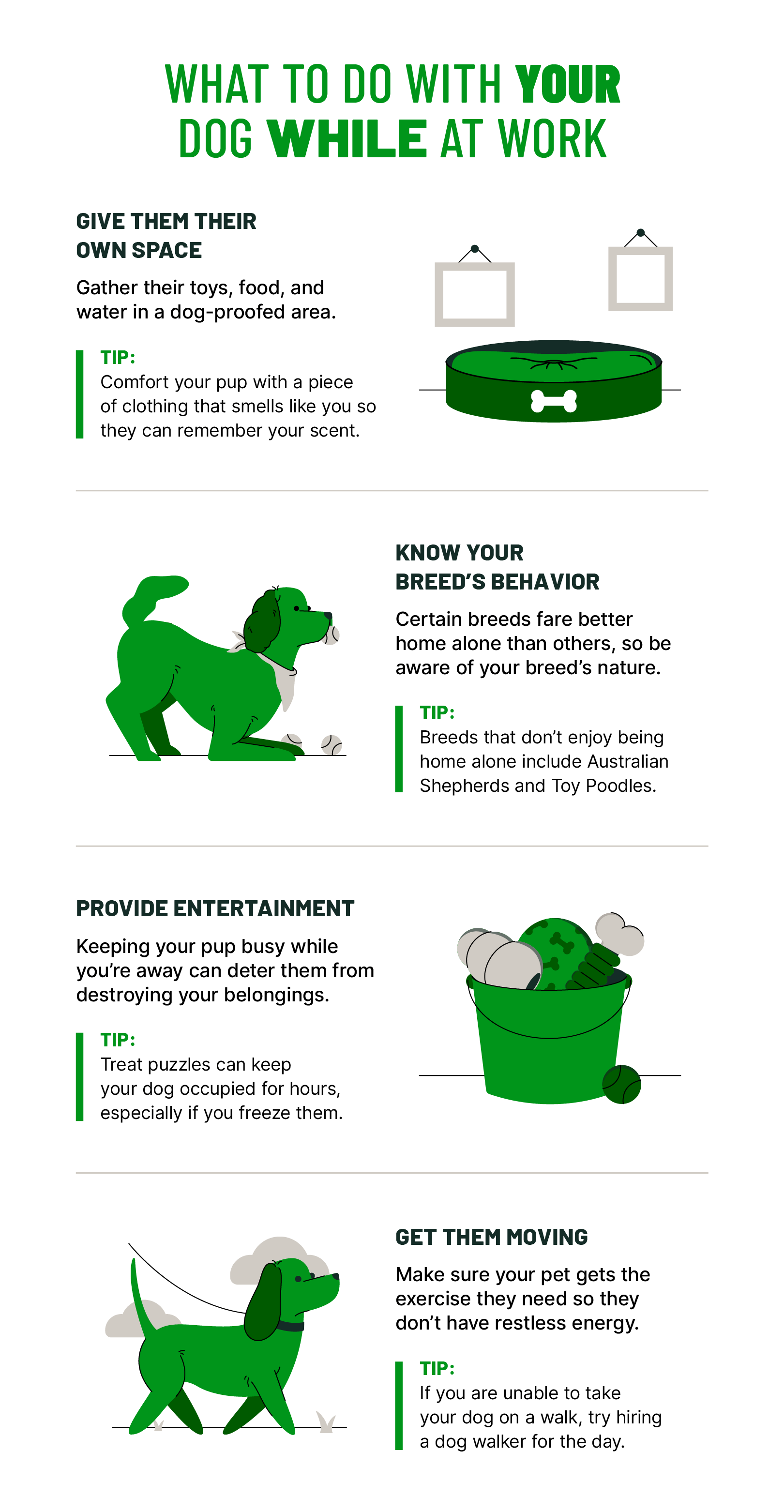
Image Source: www.hippo.com
The Impact of Boredom on Your Dog
When dogs are left alone for too long without adequate stimulation, they can become bored. This boredom isn’t just a minor inconvenience; it can have significant negative consequences for their physical and mental health. Bored dogs often resort to undesirable behaviors as a way to cope with their pent-up energy and lack of engagement.
Common Signs of Boredom and Separation Anxiety
- Destructive Chewing: Your dog might chew on furniture, shoes, or anything they can get their paws on. This is often a way to self-soothe or expend energy.
- Excessive Barking or Howling: This can be a way for your dog to communicate their distress, loneliness, or frustration.
- Digging: Indoor digging in couch cushions or outdoor digging in the yard can be a sign of boredom or a search for something to do.
- Potty Accidents: Even well-trained dogs may have accidents indoors if they are anxious or have been holding it for too long due to lack of opportunity to go outside.
- Pacing: A dog that paces back and forth incessantly may be experiencing anxiety or a buildup of unspent energy.
- Lethargy or Depression: While less outwardly destructive, a bored or anxious dog can also become withdrawn, less interactive, and appear depressed.
Preparing Your Dog for Your Absence
The key to a happy dog while you’re at work is proper preparation. This involves creating a safe and stimulating environment, establishing a routine, and providing outlets for their natural behaviors.
Creating a Safe and Comfortable Space
Your dog’s environment plays a crucial role in their comfort and security when left alone. A designated safe space can make a world of difference.
Your Dog’s Den: The Importance of a Crate or Designated Area
A crate can serve as a safe haven for your dog, much like a den for a wild canine. It provides a sense of security and can help prevent destructive behavior. However, it’s essential to introduce the crate positively and never use it as punishment.
- Positive Association: Make the crate a welcoming place with comfortable bedding, a favorite toy, and occasional treats.
- Gradual Introduction: Start by leaving the door open so your dog can explore it on their own. Then, feed them meals inside or toss treats in, gradually increasing the time you close the door.
- Crate Size: Ensure the crate is large enough for your dog to stand up, turn around, and lie down comfortably.
- Alternative Designated Area: If a crate isn’t suitable, a specific room or gated area can serve the same purpose. Dog-proof this area thoroughly, removing anything potentially harmful or tempting to chew.
Establishing a Solid Routine
Dogs thrive on predictability. A consistent routine for feeding, potty breaks, exercise, and playtime can significantly reduce anxiety and boredom when you’re away.
Morning Rituals for a Smoother Day
A good start to the day sets the tone for your dog’s entire day.
- Early Morning Potty Break: Before you leave, ensure your dog has had a thorough potty break.
- Exercise: A brisk walk or a short play session can help tire your dog out, making them more likely to rest while you’re gone. This contributes to a good dog exercise routine.
- Breakfast: Feed your dog before you leave. If your dog tends to gobble their food, consider using a slow-feeder bowl or a canine puzzle toy for their meal.
Evening Wind-Down
The evening routine is just as important for helping your dog transition from being alone to spending time with you.
- Welcome Home Routine: Greet your dog calmly. Avoid overwhelming them with too much attention immediately, which can sometimes heighten excitement or anxiety.
- Evening Potty Break: Another potty break is essential.
- Playtime and Interaction: Dedicate quality time for play, training, or just cuddles. This reinforces your bond and helps them unwind.
Engaging Your Dog’s Mind and Body
Dog enrichment isn’t just about keeping them busy; it’s about providing activities that cater to their natural instincts and intelligence. This is crucial for dog mental stimulation.
The Power of Interactive Dog Toys
Interactive dog toys are designed to challenge your dog mentally and physically, often requiring them to solve a problem to get a reward.
Canine Puzzle Toys: Brain Teasers for Pups
Canine puzzle toys come in various forms, from simple treat-dispensing balls to complex multi-part puzzles that require your dog to manipulate levers or slide compartments.
- Food-Dispensing Toys: Kongs, treat balls, and lick mats are excellent for dispensing kibble or high-value treats, making mealtime a more engaging experience.
- Logic Puzzles: These toys often have movable parts that your dog must push, lift, or slide to reveal hidden treats. They require problem-solving skills.
- Rotation is Key: Keep a variety of canine puzzle toys and rotate them regularly to maintain novelty and prevent boredom.
Long-Lasting Dog Chews: Satisfying Natural Instincts
Chewing is a natural and essential behavior for dogs. Providing appropriate long-lasting dog chews can keep them occupied for hours and also help keep their teeth clean.
- Types of Chews: Consider durable rubber chews, natural bully sticks, dental chews, or even large marrow bones (always supervise with bones).
- Safety First: Ensure the chews are appropriate for your dog’s size and chewing strength. Avoid small pieces that could be a choking hazard.
- Supervision (Initially): While designed to be long-lasting, it’s always wise to supervise your dog with a new type of chew to ensure they chew it safely.
The Importance of Scent Work and Exploration
Dogs experience the world through their noses. Engaging their sense of smell is a powerful form of dog mental stimulation.
Creating a Scent-Based Environment
- Hide and Seek Treats: Scatter kibble or small treats around the house or a designated play area. This encourages sniffing and exploration.
- Scent Trails: You can create simple scent trails using your dog’s favorite treats or toys.
- Snuffle Mats: These mats are designed with fabric strips where you can hide kibble or treats, encouraging your dog to forage and sniff.
Professional Help and Alternatives
Sometimes, despite your best efforts, you might need additional support to ensure your dog is adequately cared for and entertained while you’re at work.
Dog Daycare Alternatives: More Than Just Playtime
While traditional dog daycare is an option, there are other services that can provide excellent care and enrichment.
- Dog Walking Services: Hiring a dog walker for a midday break can provide much-needed exercise and a potty opportunity. This is a great supplement to your dog exercise routine.
- Pet Sitter Services: A pet sitter services can visit your home for a mid-day play session, walk, or just some companionship. This can be less disruptive for some dogs than daycare.
- In-Home Dog Sitting: Some sitters offer overnight stays in your home, providing constant companionship and care.
The Benefits of Professional Dog Walking
- Physical Exercise: A dog walker ensures your dog gets their energy out.
- Potty Breaks: Prevents accidents and discomfort.
- Socialization (if group walks): Some dogs benefit from interacting with other dogs in a controlled setting.
- Mental Stimulation: A change of scenery and new smells can be very engaging.
When to Consider a Pet Sitter
- Dogs with Separation Anxiety: A sitter can provide reassurance and comfort.
- Older Dogs or Puppies: Dogs who require more frequent attention or specialized care.
- Dogs Who Dislike Dog Daycare: Some dogs are overwhelmed by the social dynamics of daycare.
Advanced Dog Enrichment Strategies
Beyond toys and walks, there are more involved ways to keep your dog stimulated.
Training and Learning New Tricks
Teaching your dog new commands or tricks is a fantastic way to provide dog mental stimulation.
- Short, Frequent Sessions: Even 10-15 minutes of training can be very beneficial.
- Puzzle Training: Incorporate puzzle toys into training sessions, asking your dog to solve a simple puzzle for a reward.
- Mental Games: Teach your dog to identify toys by name, find hidden objects, or even do simple “jobs” around the house.
Environmental Enrichment
Making your dog’s environment more stimulating can significantly improve their quality of life.
Window Views and Auditory Stimulation
- Window Perches: If safe and secure, a comfortable window perch allows your dog to watch the world go by, providing visual stimulation.
- Calming Music or Talk Radio: Some dogs find the sound of human voices or calming music soothing. There are even specific “dog music” albums available.
- Interactive Cameras: Some pet cameras allow you to speak to your dog or even dispense treats remotely, offering a brief moment of interaction.
The Role of Socialization
While your dog is alone, consider how their social needs are met.
- Weekend Playdates: Schedule regular playdates with well-matched canine companions on weekends.
- Controlled Socialization: If using a dog walker or sitter, ensure they practice safe and positive socialization if appropriate for your dog.
Creating a “Workday Enrichment Plan”
To effectively manage leaving dog alone, a structured plan is ideal.
Sample Daily Schedule (Example)
This is a template; adjust based on your dog’s needs and your work schedule.
| Time | Activity | Notes |
|---|---|---|
| 6:30 AM | Wake Up & Potty Break | Quick relief before breakfast. |
| 6:45 AM | Breakfast (in a slow feeder or puzzle toy) | Makes mealtime a challenging activity. |
| 7:00 AM | Morning Walk/Play Session | Essential part of the dog exercise routine. |
| 7:30 AM | Crate/Den Time with a Long-Lasting Dog Chew | Settle down before you leave. |
| 8:00 AM | Departure | Leave out canine puzzle toys and water. |
| 11:00 AM | Midday Break (Dog Walker/Sitter/Self-Exercising Toy) | Provides dog enrichment and relieves pressure. |
| 3:00 PM | Final Potty Break (if sitter available) | Or rely on a scheduled potty break. |
| 5:00 PM | Arrival Home | Calm greeting, then a potty break. |
| 5:30 PM | Evening Play Session/Training | Reconnect and engage. |
| 6:30 PM | Dinner (again, perhaps with another puzzle) | Continues mental engagement. |
| 7:00 PM | Relaxing Time/Gentle Play | Wind down the day. |
| 9:00 PM | Final Potty Break Before Bed | Ensure comfort for the night. |
Frequently Asked Questions (FAQ)
Q: How long is too long to leave a dog alone?
A: Generally, most adult dogs can comfortably hold their bladder for 4-6 hours. However, for mental well-being, it’s best not to leave them alone for more than 8 hours without a break. Puppies and senior dogs require more frequent breaks.
Q: My dog is destructive when I leave. What should I do?
A: This is a common sign of boredom or separation anxiety. Ensure they have plenty of dog enrichment activities, interactive dog toys, and long-lasting dog chews. Consider a midday dog walker or pet sitter services. Gradually accustom them to your absence and consult a professional trainer or veterinary behaviorist if the problem persists.
Q: Are doggy daycare alternatives always better than leaving a dog alone?
A: Not necessarily. Some dogs thrive on their own with a well-prepared environment, while others might find daycare overwhelming. Dog daycare alternatives like dog walking or pet sitter services can be excellent if they suit your dog’s personality and your schedule. The key is to provide adequate dog mental stimulation and exercise regardless of the method.
Q: How can I tell if my dog is truly bored or just tired?
A: Boredom often manifests as restless energy, destructive behavior, or excessive vocalization. Tiredness usually leads to sleep or quiet relaxation. If your dog is seeking attention, chewing inappropriately, or pacing, it’s likely boredom or anxiety rather than simple fatigue.
Q: What are the best interactive dog toys for a power chewer?
A: For power chewers, look for extremely durable toys made from hard rubber or reinforced materials. Brands like Kong (Extreme line), West Paw, and Goughnuts are known for their durability. Always inspect these toys regularly for wear and tear. Long-lasting dog chews designed for aggressive chewers are also a good option.
By implementing these strategies, you can ensure your dog remains happy, healthy, and well-behaved even when you’re at work. Prioritizing dog enrichment and dog mental stimulation will lead to a more contented companion and a stronger bond between you.