
Can I remove dog poop smell from carpet? Yes, you can absolutely remove dog poop smell from carpet. This guide will show you how to tackle those unpleasant odors and stubborn stains effectively.
Dealing with dog poop on your carpet is never fun. It’s a common problem for pet owners, but thankfully, it’s a solvable one. The key is to act fast and use the right cleaning methods. We’ll walk you through everything from immediate cleanup to deeper treatments to ensure your carpets are fresh and stain-free. You’ll learn about powerful commercial cleaners and effective DIY solutions that can save your carpets and your sanity. Let’s get those odors banished and those stains gone!
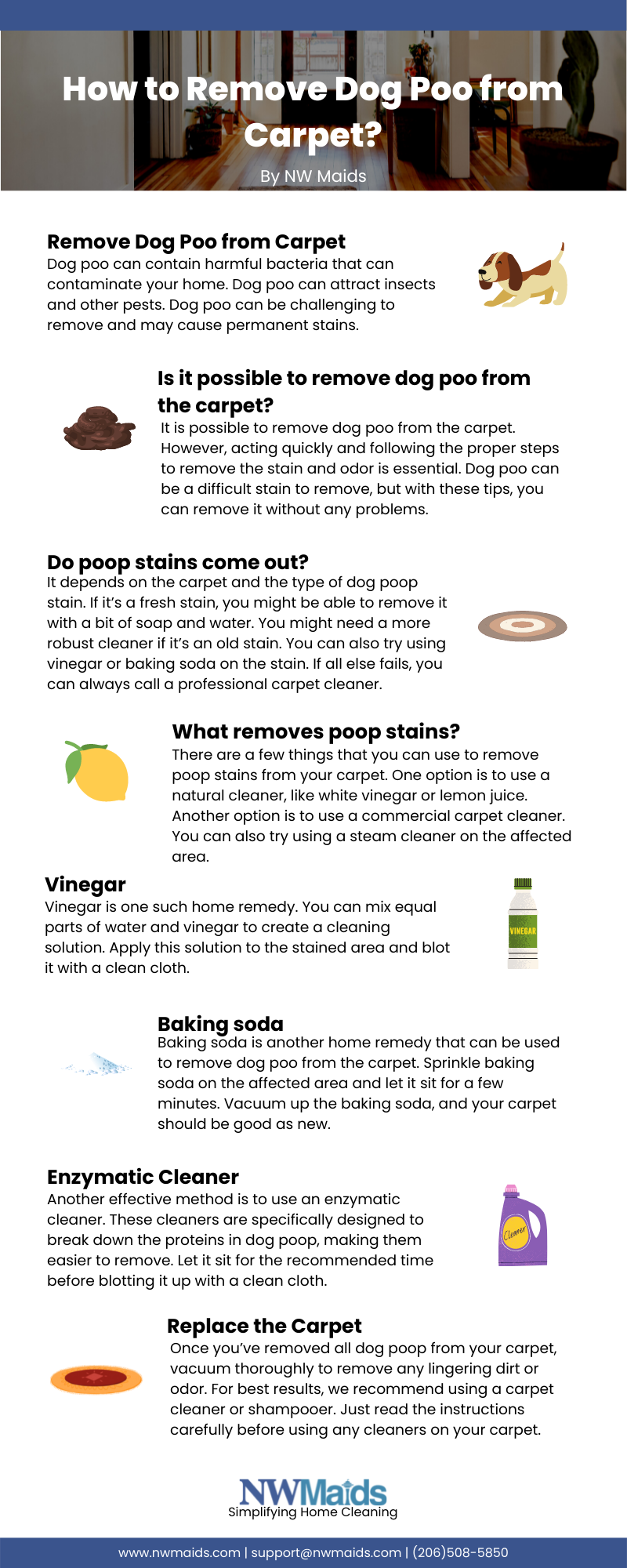
Image Source: nwmaids.com
Immediate Cleanup: The First Line of Defense
When your dog has an accident, quick action is your best friend. The longer the poop sits on the carpet, the deeper it penetrates the fibers and padding, making odor and stain removal much harder.
Step 1: Remove Solids Promptly
- Gather your tools: You’ll need paper towels or disposable gloves, a plastic bag for disposal, and a stiff spatula or dull knife.
- Scoop it up: Gently lift the solid waste from the carpet. Try not to push it further into the fibers. Work from the outside of the mess inward to avoid spreading it.
- Dispose properly: Place the scooped poop into a plastic bag and tie it securely before discarding it in an outdoor trash bin.
Step 2: Blot the Area
- Use absorbent material: Take clean paper towels or a clean cloth.
- Blot, don’t rub: Press down firmly on the affected area. Continue blotting with fresh towels until no more moisture or residue is absorbed. Rubbing can spread the stain and push it deeper into the carpet fibers.
Tackling the Odor and Stain: Choosing Your Weapon
Once the bulk of the mess is removed, you’ll need to deal with the lingering odor and any remaining stain. This is where specialized cleaners and natural remedies come into play. A good pet odor remover is essential here.
Option 1: Enzymatic Cleaners – The Natural Warriors
Enzymatic cleaners are highly effective for pet messes because they use natural enzymes to break down organic matter, like the proteins in dog waste. This process eliminates the source of the odor, rather than just masking it. This is often the top recommendation for carpet cleaner for dog urine and other biological stains.
How to Use Enzymatic Cleaners
- Choose a quality product: Look for cleaners specifically formulated for pet stains and odors. Many brands offer excellent enzymatic cleaner for pet stains.
- Test in an inconspicuous area: Before applying to the main stain, test the cleaner on a small, hidden spot of your carpet to ensure it doesn’t cause discoloration.
- Saturate the area: Pour or spray the enzymatic cleaner generously onto the stained and affected area. It needs to reach as deep as the urine or feces penetrated, which might include the carpet padding.
- Let it dwell: This is crucial! Enzymatic cleaners need time to work. Follow the product’s instructions, but typically, you’ll want to let it sit for at least 10-15 minutes, or even longer for tough odors. Some products recommend covering the area with a damp cloth or plastic wrap to keep it moist and active.
- Blot again: After the dwell time, blot the area thoroughly with clean cloths or paper towels to absorb the loosened residue and excess cleaner.
- Air dry: Allow the carpet to air dry completely. Avoid walking on the area while it’s wet. You can use a fan to speed up the drying process.
- Repeat if necessary: For stubborn odors or stains, a second application might be needed.
Option 2: Vinegar and Baking Soda – The DIY Duo
For those who prefer natural, readily available solutions, the combination of vinegar and baking soda is a powerful ally. This is a classic DIY dog poop smell removal method.
Vinegar for Dog Smells
White vinegar is acidic and can help neutralize alkaline odors, making it a great natural carpet deodorizer.
Baking Soda for Odor Removal
Baking soda is a natural absorbent and deodorizer. It can soak up lingering smells and moisture.
The Vinegar and Baking Soda Method
- Vinegar Solution: Mix equal parts white vinegar and water in a spray bottle.
- Apply the Vinegar: Spray the vinegar solution generously onto the affected area, ensuring it soaks into the carpet fibers.
- Blot: Blot the area with clean towels to absorb the vinegar solution and any remaining residue.
- Apply Baking Soda: Once the area is damp (not soaking wet), sprinkle a generous amount of baking soda over it. Make sure to cover the entire affected spot.
- Let it work: Allow the baking soda to sit for at least several hours, or preferably overnight. It will absorb moisture and odors.
- Vacuum: Thoroughly vacuum up all the dried baking soda.
Option 3: Hydrogen Peroxide – For Tough Stains
Hydrogen peroxide for carpet cleaning can be very effective for lifting stubborn organic stains. However, it has a slight bleaching effect, so it’s crucial to test it first.
Important Note: Only use 3% hydrogen peroxide solution. Higher concentrations can damage carpet fibers.
Using Hydrogen Peroxide for Stains
- Test: Always test a small, inconspicuous area of your carpet first to check for colorfastness.
- Apply: Lightly dampen a clean cloth with 3% hydrogen peroxide.
- Dab: Gently dab the stain with the hydrogen peroxide-dampened cloth. Do not saturate the carpet.
- Blot: Blot the area with a dry cloth to absorb excess moisture and lifted stain.
- Rinse (optional but recommended): If you used a lot of hydrogen peroxide, you might want to lightly mist the area with plain water and blot again to remove any residue.
- Dry: Allow the carpet to air dry.
Caution: Hydrogen peroxide can lighten colored carpets. Use with extreme caution. It’s generally safer on lighter-colored carpets.
Deeper Cleaning and Odor Elimination
Sometimes, the odor and stain are persistent and require a more thorough approach.
Using a Carpet Cleaner Machine
If the mess is extensive or you have large areas to clean, a carpet cleaning machine (steam cleaner or carpet extractor) can be invaluable.
Carpet Cleaner for Dog Urine
Many carpet cleaning machines come with attachments that are perfect for spot cleaning pet stains.
- Pre-treat: Before using the machine, pre-treat the spot with an enzymatic cleaner or your DIY solution.
- Use Appropriate Solution: Fill the machine’s reservoir with water and a carpet cleaning solution recommended for pet stains. Some machines allow you to add a specialized pet odor remover.
- Extract: Go over the affected area with the machine, following the manufacturer’s instructions. Ensure you are extracting as much moisture as possible.
- Rinse: If the machine has a rinse cycle, use it to remove any cleaning solution residue.
- Dry: Allow the carpet to dry completely.
Reaching Deep: The Carpet Padding
Dog poop, especially if it’s diarrhea or has been left for a while, can seep through the carpet fibers and into the underlying padding. This is a common culprit for persistent odors.
- Accessing Padding: If the odor is still strong after cleaning the carpet surface, the padding might be contaminated. In severe cases, you may need to lift a corner of the carpet to access and clean or even replace the affected section of padding.
- Enzymatic Treatment for Padding: If you can access the padding, saturate it with an enzymatic cleaner. Allow it to sit and work, then blot thoroughly. Ensure good ventilation to help it dry.
Advanced Odor Neutralization
- Odor Absorbers: After cleaning and drying, place bowls of activated charcoal or baking soda near the affected area for a few days to absorb any remaining faint odors.
- Carpet Deodorizer: For a final touch, you can use a high-quality carpet deodorizer specifically designed for pet odors. Spritz lightly after the carpet is completely dry.
Dealing with Stubborn Stains and Lingering Smells
Sometimes, even after initial cleaning, a faint stain or odor might persist. Here’s how to tackle those tricky situations.
Stubborn Stains
- Repeat Applications: Don’t be afraid to repeat the cleaning process, especially with enzymatic cleaners, on stubborn stains. Patience is key.
- Professional Cleaning: For very old or deeply set stains, professional carpet cleaning might be the best option. They have access to more powerful cleaning agents and equipment.
Persistent Odors
- Ventilation: Good airflow is your best friend. Open windows and use fans to circulate air and help dissipate odors.
- Air Purifiers: A good quality air purifier with a HEPA filter and activated carbon can help remove odor molecules from the air in your home.
- Ozone Generators (Use with Extreme Caution): Ozone generators can be effective at neutralizing strong odors. However, they should only be used in unoccupied spaces and with strict adherence to safety guidelines, as ozone can be harmful to pets and humans. Never use them while your pet or family members are in the room.
Upholstery Cleaner for Pet Odors
What if the accident wasn’t on the carpet, but on your couch or other upholstered furniture? The same principles apply.
- Act Quickly: Blot up any solids or liquids immediately.
- Enzymatic Cleaners: Look for an upholstery cleaner for pet odors that uses enzymes. Always test in an inconspicuous area first.
- Spot Cleaning: Apply the cleaner to a cloth, not directly to the upholstery, unless the product specifically instructs otherwise.
- Blotting is Key: Gently blot the stained area. Avoid oversaturating delicate fabrics.
- Ventilation: Ensure the furniture dries thoroughly in a well-ventilated area.
Prevention is Better Than Cure
The best way to deal with dog poop smell and stains is to prevent them in the first place.
- Consistent Potty Training: Reinforce potty training with positive reinforcement.
- Regular Outdoor Breaks: Ensure your dog gets enough opportunities to relieve themselves outside.
- Monitor Your Pet: Watch for signs that your dog needs to go out, such as restlessness, sniffing, or circling.
- Dietary Changes: If your dog is having frequent accidents, especially diarrhea, consult your veterinarian. Dietary issues can lead to more frequent and messier accidents.
- Pet Gates and Barriers: Use baby gates or pet barriers to restrict access to certain areas of your home if necessary, especially during training or when you can’t supervise your pet closely.
Summary Table of Cleaning Methods
| Method | Best For | Pros | Cons |
|---|---|---|---|
| Enzymatic Cleaners | All types of pet messes, deep odors | Breaks down organic matter, eliminates odor source | Can take time to work, requires proper saturation |
| Vinegar & Baking Soda | Mild odors, general freshening | Natural, inexpensive, readily available | May not be strong enough for severe odors/stains |
| Hydrogen Peroxide (3%) | Stubborn organic stains (light carpets) | Effective stain remover | Can bleach carpet fibers, test first |
| Carpet Cleaning Machine | Large areas, deep cleaning, heavy soiling | Powerful extraction, can use specialized solutions | Requires equipment, can be labor-intensive |
| Professional Cleaning | Very old stains, deep contamination, persistent odors | Professional-grade equipment and solutions, expertise | Costly, requires scheduling |
Frequently Asked Questions (FAQ)
Q1: How quickly should I clean up dog poop from carpet?
A1: The sooner, the better! Immediate cleanup is critical to prevent the odor and stain from setting in.
Q2: Can I use bleach on dog poop stains?
A2: No, you should avoid using bleach. Bleach can permanently damage carpet fibers and colors, and it doesn’t effectively neutralize pet odors. It can also react with ammonia in urine to create toxic fumes.
Q3: My carpet still smells like dog poop after cleaning. What should I do?
A3: The odor might be in the carpet padding. Try saturating the area with an enzymatic cleaner, ensuring it reaches the padding. Good ventilation and odor absorbers like baking soda or activated charcoal can also help. If the smell persists, professional cleaning might be necessary.
Q4: Is it safe to use a steam cleaner on dog poop stains?
A4: While steam cleaners can clean, the heat can sometimes set protein-based stains and odors, making them harder to remove. It’s often better to use cold or lukewarm water and specialized pet cleaning solutions, preferably enzymatic ones, in your carpet cleaner. If you do use a steam cleaner, ensure you’ve pre-treated with an appropriate pet stain remover.
Q5: How do I get the smell out of my carpet after my dog had diarrhea?
A5: Diarrhea is tougher because it’s more liquid and can spread quickly. You’ll need to blot up as much as possible immediately. Then, saturate the area with a powerful enzymatic cleaner, making sure it soaks into the padding. Repeat applications and ensure thorough drying are key. Using a carpet cleaner for dog urine designed for this purpose is highly recommended.
By following these steps and using the right products, you can successfully banish dog poop odors and stains from your carpets, leaving your home fresh and clean. Remember, consistency in training and prompt action during accidents are your best defenses against these unwelcome messes.