
What is the purpose of the notch on a military dog tag? The notch on a military dog tag is primarily a way to help the automatic engraving machines align the tag correctly for marking.
For decades, a familiar sight accompanying our servicemen and women has been the simple, yet vital, dog tag. These metal discs, worn around the neck, carry essential information for identification. But have you ever closely examined one and noticed a small notch, often on one side? Many people wonder about the purpose of this seemingly minor detail. While some might speculate it’s for preventing chafing or as a unique identifier, the real reason behind the dog tag notch is rooted in practicality and efficiency, stemming from the evolution of military record-keeping and identification systems.
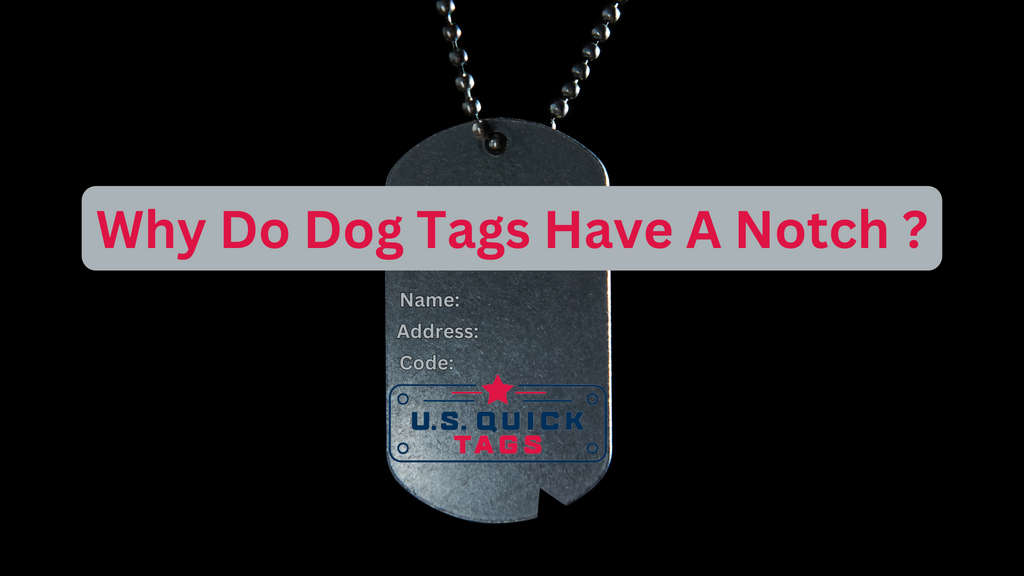
Image Source: usquicktags.com
The Evolution of Dog Tag Identification Marks
The concept of identification tags for soldiers is not new, but the modern iteration of the dog tag, with its distinctive shape and purpose, gained prominence during World War I. Before standardized tags, soldiers often improvised, using whatever they could to carry their personal information. This led to inconsistencies and difficulties in identifying fallen soldiers.
Early Identification Efforts
In the early days of warfare, identifying deceased soldiers was a grim and often haphazard affair. Families might go months, or even years, without knowing the fate of their loved ones. This lack of clear identification caused immense emotional distress and practical problems for the military, including difficulties with burial, notification of next of kin, and even accounting for personnel.
Different nations and branches of service implemented various methods. Some soldiers carried personal tokens, others wrote their names on scraps of paper tucked into their uniforms, and in some cases, the military provided rudimentary identification cards. However, these methods were prone to damage, loss, or being illegibility. The need for a more robust and standardized system became increasingly apparent as warfare became more organized and casualty rates rose.
The Birth of the Modern Dog Tag
The term “dog tag” itself is believed to have originated from the similarity in shape to the tags attached to dogs’ collars, particularly those used by the military for messenger dogs or other canine units. However, its primary purpose evolved to be for human soldiers.
During World War I, the United States military began to issue standardized identification tags to its soldiers. These early tags were typically round or oval and made of metal. They carried basic information such as the soldier’s name, serial number, and sometimes their unit or religious affiliation. The introduction of these tags marked a significant step forward in ensuring that fallen soldiers could be identified and their families notified promptly.
The Shift to the Oval Shape and the Notch
As military operations became more complex, the need for more efficient and reliable identification systems grew. The design of the dog tag evolved over time, with the familiar oval shape becoming the standard for many armed forces. This shape was not just an aesthetic choice; it was functional.
However, the most significant functional change related to the notch came with the introduction of automated engraving machines. These machines were developed to quickly and accurately etch the required information onto the metal tags.
The Role of Automated Engraving
Imagine a situation where thousands, even tens of thousands, of dog tags need to be prepared quickly, especially during wartime. Manual engraving would be far too slow and prone to errors. The development of specialized machines that could automatically imprint information onto the tags was a critical advancement.
These machines typically used a system of punches or engraving tools that struck the metal to create the characters. For the machine to work correctly and consistently, it needed a way to orient the tag perfectly before each imprint. This is where the notch played its crucial role.
Military Dog Tag Notches Meaning: A Technical Function
The primary function of the notch on a military dog tag is to serve as a guide for automated engraving machines. Think of it as a keyed slot that ensures the tag is inserted and positioned in the same way every single time.
The Engraving Machine’s Perspective
These early automated engraving machines, often referred to as “tag embossers” or “data markers,” relied on physical guides to align the metal tags. The notch provided a specific point of contact for a pin or a jig within the machine. When the tag was placed into the machine, the notch would slot into a corresponding recess. This action would then automatically position the tag so that the engraving tools could strike the correct locations for the soldier’s information.
Without this notch, the operator would have to manually ensure the tag was perfectly aligned for each line of text, a process that is both time-consuming and increases the risk of misspellings or misplaced information. The notch essentially made the engraving process foolproof and significantly faster, which was critical during mass mobilization.
Why Not Just Engrave Both Sides?
One might wonder why they didn’t simply engrave on both sides of a perfectly rectangular tag. The answer lies in the mechanics of the early engraving machines and the desired uniformity of the output.
- Machine Design: The machines were designed with the notch in mind as the primary alignment feature. Modifying them to handle a tag without a notch would have been a complex engineering challenge.
- Consistency: The notch ensured that regardless of how the tag was initially fed, it would always be engraved in the same orientation. This standardized the appearance and ensured that the information was presented clearly and consistently across all tags.
Dog Tag Serial Number Location and Other Data
The information typically found on a dog tag is crucial for identification. This usually includes:
- Full Name: The soldier’s complete legal name.
- Serial Number: A unique identifying number assigned to the soldier. This was vital for military record-keeping, distinguishing individuals with similar names, and tracking personnel. The dog tag serial number location is consistently engraved for easy retrieval.
- Blood Type: This became increasingly important for medical personnel on the battlefield, allowing for rapid and appropriate blood transfusions.
- Religious Preference: Information about the soldier’s religious affiliation was included to ensure that, in the event of death, they could be buried according to their religious customs or that appropriate religious support could be provided.
The notch ensured that these critical pieces of information were precisely placed on the tag, making them legible and easily accessible to those who needed them.
Dog Tag Notching History: A Deeper Dive
The dog tag notching history is intrinsically linked to the advancements in industrial manufacturing and the evolving needs of military identification systems. While the exact date of the first notched tag is difficult to pinpoint, its widespread adoption correlates with the increasing use of automated machinery in the early to mid-20th century.
The Interwar Period and Beyond
Following World War I, the lessons learned about identification led to refinements in the dog tag system. The oval shape and the characteristic notch became more firmly established. During the interwar period and leading up to World War II, the efficiency gains provided by notched tags and automated engraving were significant. This allowed for the rapid production of millions of tags needed for a large fighting force.
Dog Tag War Era Markings
Different dog tag war era markings can tell us more about the specific time and context of their use. For instance, the information present on the tags often reflects the medical and administrative priorities of that era.
- World War I: Tags might primarily feature name, serial number, and possibly religious preference.
- World War II: The inclusion of blood type became standard practice due to the increased prevalence of battlefield surgery and the need for blood transfusions.
- Later Conflicts: Tags have continued to evolve, with some modern versions including DNA information or having more advanced materials.
The notch, however, remained a constant feature, a testament to its enduring utility in the engraving process.
Beyond the Notch: Other Aspects of Dog Tag Design
While the notch is a primary functional element, other aspects of dog tag design also have historical and practical significance.
The Double Tag System
The concept of issuing soldiers two identical tags, known as the “breakaway” or “dual” tag system, became prevalent. When a soldier was killed, one tag would remain with the body for identification and burial purposes, while the other would be sent back to the unit or headquarters to report the casualty. This ensured a more accurate accounting of personnel and facilitated notification of next of kin. The notch played a role here too, ensuring that both tags produced by the machine were identical.
Materials and Durability
Dog tags are typically made from durable metals like stainless steel or aluminum. These materials are chosen for their resistance to corrosion, heat, and general wear and tear, ensuring that the information remains legible even in harsh battlefield conditions.
Religious Affiliation and Dog Tag Dog Breed Identification?
While the main purpose of a dog tag is soldier identification, there’s a common misconception or tangential interest in dog tag dog breed identification. This is not a function of military dog tags. Military dog tags are exclusively for human soldiers.
However, the concept of identifying animals, particularly service animals, with tags is a separate but related topic. In contexts outside of military service, tags are indeed used for dog tag dog breed registry and to denote dog breed characteristics. These tags might be on a pet’s collar and could include the dog’s name, owner’s contact information, vaccination records, or even a registration number from a kennel club. This serves a similar purpose of identification but for companion animals.
Dog Tag Ear Cropping Connection?
There is absolutely no connection between dog tag ear cropping and the notches on military dog tags. Ear cropping is a cosmetic or sometimes functional procedure performed on certain dog breeds, which has no relation to the design or purpose of military identification tags. The notch on a dog tag is purely for mechanical alignment during the engraving process.
The Historical Significance of Dog Tags
The historical significance of dog tags extends far beyond their practical function. They are powerful symbols of military service, sacrifice, and the efforts made to honor and account for every individual soldier.
A Tangible Link to the Past
For veterans and their families, dog tags are often cherished heirlooms, representing a direct link to a loved one’s military service. They are tangible reminders of courage, duty, and the personal experiences of those who served. The dog tag historical significance is undeniable, embodying the individual stories within larger historical events.
Memorials and Remembrance
Dog tags are frequently used in memorials and public displays to represent fallen soldiers. The sheer number of tags in such displays can convey the scale of loss in conflicts, serving as a poignant reminder of the human cost of war.
Frequently Asked Questions (FAQ)
Q1: Can I get a dog tag with my dog’s breed information on it?
Yes, if you’re referring to pet identification tags, you can certainly have tags that include your dog’s breed, name, and your contact information. However, military dog tags do not carry breed information; they are for human identification only.
Q2: Are all military dog tags notched?
Historically, the notch has been a standard feature on U.S. military dog tags for a significant period, primarily due to the use of automated engraving machines. However, designs and manufacturing processes can evolve, and there might be variations depending on the specific era, country, or branch of service. But for the most common and recognizable form, the notch is present.
Q3: Did soldiers in every war use notched dog tags?
Notched dog tags became standard with the widespread adoption of automated engraving, which became prevalent around World War I and became more common in subsequent conflicts like World War II and the Korean War. Earlier identification tags might not have had this feature if they were manually inscribed or made using different methods.
Q4: What kind of information is usually on a modern military dog tag?
Modern military dog tags typically include the service member’s full name, Social Security number (or equivalent military identification number), blood type, and religious preference. Some may also include emergency contact information.
Q5: Why is there so much emphasis on the notch if the information is on the tag anyway?
The emphasis on the notch is about the efficiency and accuracy of the manufacturing process, particularly in the past. It’s a mechanical solution to ensure that hundreds of thousands of identical tags could be produced quickly and with minimal errors. The information itself is crucial, but the notch was the key to its reliable and rapid inscription.
Q6: Does the notch have any other meaning besides engraving alignment?
No, the dog tag serial number location and other details are for identification, but the notch itself is purely a manufacturing aid. It doesn’t represent rank, unit, or any personal characteristic of the soldier.
Q7: Can I buy replica dog tags with a notch?
Yes, replica dog tags, often with the notch, are widely available for purchase. Many people buy them as souvenirs, memorials, or for personal use, often customizing them with their own names or significant dates.